

Rethinking Hydrogen Production
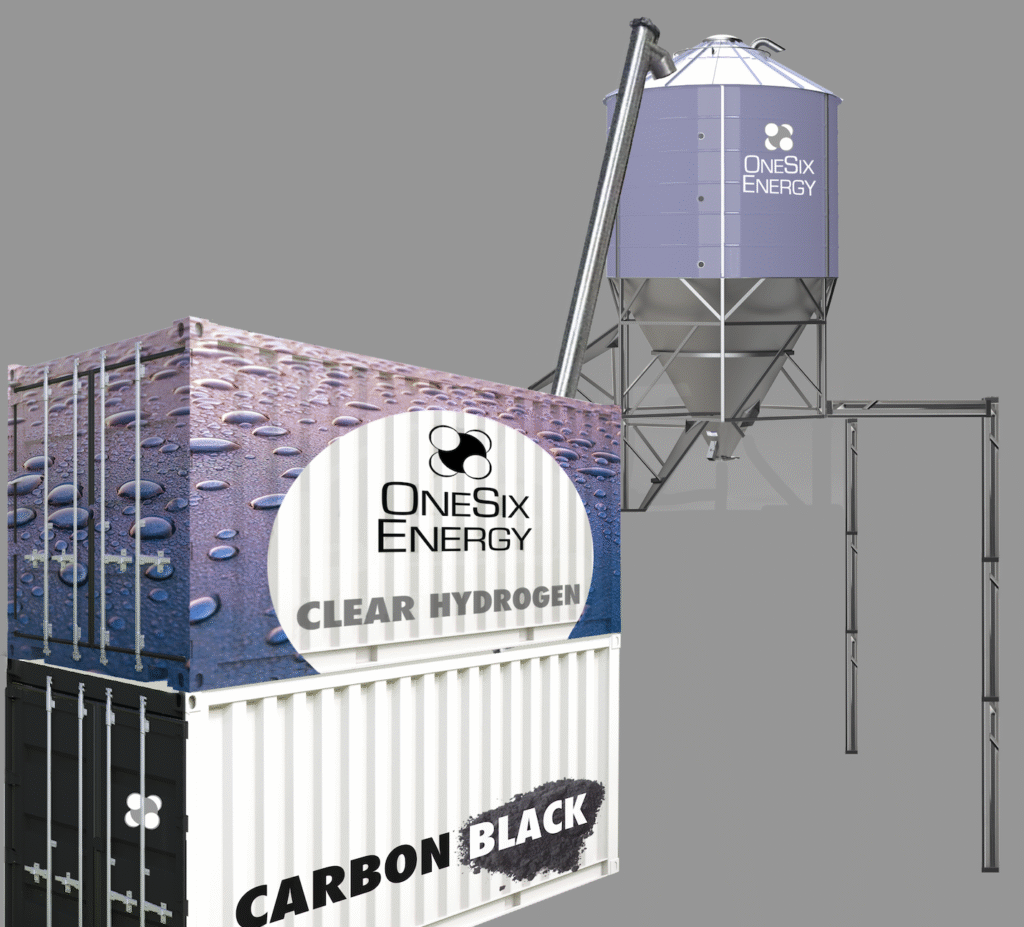
Detroit-based OneSix Energy is a clean-energy technology company focused on advancing a lower-carbon approach to hydrogen production. Headquartered at Newlab in Detroit, the startup is developing a proprietary methane pyrolysis system designed to produce hydrogen without carbon dioxide emissions, while also generating solid carbon as a co-product. SBN Detroit interviewed with cofounder Stefan Sysko about the company’s origins, its approach to hydrogen production, and why Detroit is positioned to play a leading role in the next phase of the energy transition. Q: Can you give us the elevator version of OneSix Energy — how it got started, the impetus behind it, and the approach you’re taking to hydrogen production? A: OneSix Energy really began with my co-founder, Dan Darga, who back in 2002 was working at General Motors. He read about the hydrogen economy and immediately knew he wanted to be part of it. He transferred to GM’s fuel cell division in upstate New York, then later worked for a solid oxide fuel cell company. While there, he kept running into the same problem: carbon buildup clogging systems. His perspective was that we were fighting nature instead of working with it. That led him to start thinking differently about surfaces, materials, and how carbon behaves. Dan eventually left to work at NASA’s Jet Propulsion Laboratory, where he learned how to take ideas from concept to deployment in extreme, real-world conditions. He combined these two experiences, refined them, and approached me. I’ve been a lifelong entrepreneur, and I felt I had one more startup in me — one that could genuinely address a major global challenge. We incorporated OneSix Energy nearly two years ago, bootstrapped the initial design and modeling, filed a patent that’s now pending, raised a friends-and-family round, built and independently tested a prototype, and are now moving toward a pilot phase. Q: What problem is hydrogen uniquely positioned to solve that other energy carriers can’t? A: Hydrogen is incredibly energy-dense by mass, and when it’s used, the only byproduct is water vapor. It’s versatile — it can be used as a fuel for power generation or as a chemical feedstock. Hydrogen has been called “the fuel of the future” for decades but it’s difficult and expensive to produce cleanly. Today, about 90 percent of hydrogen is made using steam methane reformation, which is cheap but very dirty — roughly 11 tons of CO₂ for every ton of hydrogen produced. Electrolysis, on the other hand, is clean but extremely expensive and water-intensive. It requires fresh water, significant electricity, and even when powered by renewables, you lose about half the energy in the process. When you look at sectors like data centers — which already consume enormous amounts of electricity and water — electrolysis actually worsens the problem. Our system is different. We’re off-grid. We recirculate a fraction of the hydrogen we produce to power our reactor, so we don’t need external energy, and we don’t use water. In fact, we generate fresh water as a byproduct. Q: Can you explain methane pyrolysis and what OneSix Energy has developed? A: Methane pyrolysis involves taking methane — CH₄, the main component of natural gas — and breaking it into hydrogen and carbon using high temperatures in the absence of oxygen. Because there’s no oxygen, you don’t form CO₂. Instead, you produce solid carbon. That solid carbon – or “carbon black” – is actually valuable. It’s used in products like tires, shoe soles, and industrial materials. There’s a roughly $40 billion global market for carbon black today. Our goal is to upcycle that carbon while producing hydrogen at a lower cost than electrolysis, without water use or external energy input. Q: Hydrogen production often involves trade-offs. What innovations are helping overcome those barriers? A: Right now, the industry is stuck between options that are either cheap and dirty or clean and expensive. What’s changing is the recognition that we need new pathways — not just incremental improvements. Innovations in materials science, reactor design, and system efficiency are making approaches like methane pyrolysis viable at scale. The key is eliminating emissions without introducing new resource constraints. Q: Where do you see the earliest and most impactful applications for clean hydrogen? A: Two areas stand out immediately: data centers and shipping ports. Ports face increasing regulatory pressure because of emissions from ships idling while docked. Hydrogen-powered equipment and shore power could significantly reduce pollution while keeping operations moving. We also see opportunities in power generation for buildings, factories, and industrial facilities. Long-term, hydrogen fuel for heavy-duty transportation — Class 8 trucks, for example — is very compelling. Electrifying those vehicles requires massive and expensive batteries that reduce payload capacity. Hydrogen avoids that issue. Q: Why build a clean-energy technology company in Detroit? A: Detroit put the world on wheels. There’s no reason it shouldn’t lead the energy transformation. We’re at Newlab, surrounded by engineers, manufacturers, and people who understand how to scale physical systems. Detroit is a perfect microcosm — a place where you could demonstrate how an entire city transitions to clean energy. Plus, I was born and raised in the city, so it’s home to me. Q: What misconceptions do you encounter most often about hydrogen? A: The first is safety. People immediately think of the Hindenburg. But hydrogen is actually lighter than air and dissipates quickly, whereas gasoline fumes stay low and linger. When you look at safety data, hydrogen performs very well compared to other fuels. The Hindenburg taught us the hard way that we need to develop unique handling procedures for hydrogen – and we have. Q: What should Michiganders understand about hydrogen’s role in a sustainable energy future? A: Michigan potentially has significant natural hydrogen resources, which should be explored. But we need to remember that it will likely be years, if not decades, before that becomes viable, We also have the Great Lakes — which must be protected. If all hydrogen today were produced via electrolysis, the water consumed would be equivalent to Lake St. Clair