
Eastern Market Expands Investment in Local Growers
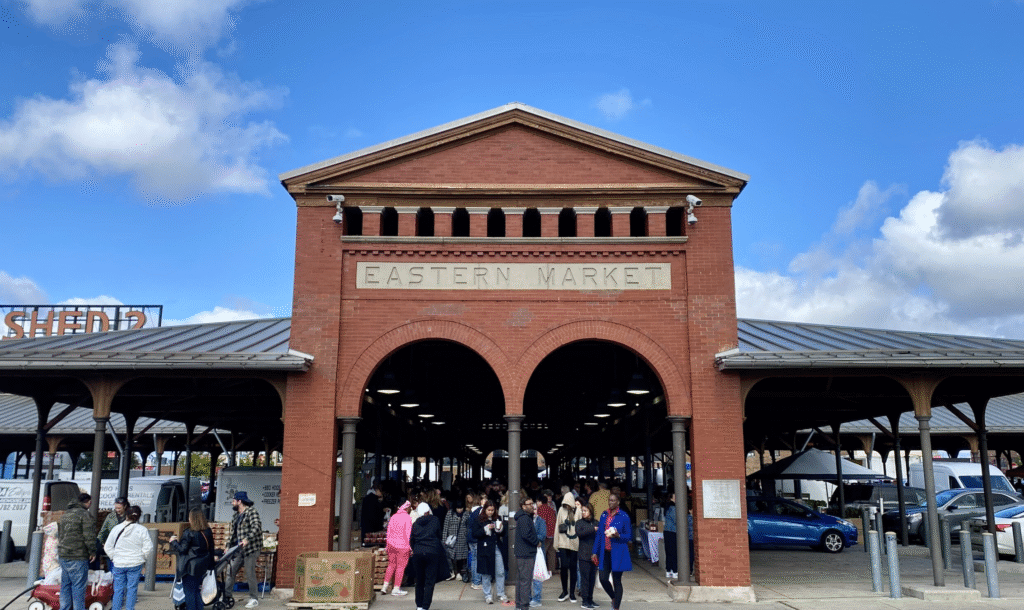
Eastern Market Partnership, in collaboration with the City of Detroit’s Office of Sustainability Urban Agriculture Division, has announced $240,000 in grant funding to support Detroit-based farmers and farmer collectives. The grants will advance food access, climate education, sustainable land use, and economic opportunity, with priority given to Black- and Indigenous-led farms, youth-led initiatives, and projects rooted in historically disinvested neighborhoods. The recipients – ranging from cooperatives and community gardens to individual urban farms – were selected through a competitive request for proposals process. The funding builds on Eastern Market’s broader efforts to strengthen Detroit’s local food ecosystem, including expanded purchasing programs for urban growers, wholesale distribution improvements, and ongoing infrastructure investments such as the redevelopment of Shed 7. SBN Detroit interviewed Katy Trudeau, president and CEO of Eastern Market, about why this investment matters now, how it supports Detroit’s evolving urban agriculture landscape, and what it signals for the future of local food systems. Q: From Eastern Market’s perspective, why was this the right moment to invest in Detroit’s urban farmers at this scale? A: We’ve been building toward this moment for a few years. In 2023, Eastern Market was awarded Local Food Purchasing Assistance funding through the USDA, which created a dedicated channel for purchasing produce from Detroit’s urban farms. That program reinforced something many of us saw during the pandemic – long supply chains are vulnerable, and there is real importance in strengthening local food systems. Through that federal program, roughly 60 percent of our purchasing went directly to Detroit-based urban growers, with the remainder sourced from regional partners. It proved that we had both the supply and the community demand to sustain a more localized system. The City Council’s decision to award this new grant funding gives us another tool to invest directly in that growing network of urban farmers who are feeding Detroiters. We’ve long supported many of these growers through Saturday Market vending opportunities and other initiatives. This grant allows us to deepen that commitment and build on the foundation already in place. Q: Urban farming has long been part of Detroit’s identity. How do you see its role evolving today? A: Urban agriculture is a micro-industry in Detroit, but it plays an outsized role. It is directly responsive to the need for shorter supply chains. Growing food locally that we can eat locally strengthens access to nutrient-dense food and reduces reliance on distant systems. Many of the farms receiving grants are not only producing food but also teaching residents how to grow their own. That educational component is critical. It builds long-term capacity and strengthens food security at the neighborhood level. There are also broader impacts. Urban farms create gathering spaces where neighbors meet neighbors. They generate small-business opportunities and, in some cases, provide employment and workforce development. They help stabilize vacant land and turn it into productive community assets. It’s economic development, environmental stewardship, and social infrastructure all in one. Q: Why was the focus on Black- and Indigenous-led farms essential to the design of the program? A: Detroit is a majority-Black city, and much of the farming happening here is led by Black growers. We want investment dollars to reflect and support the communities where the work is taking place. One of the grant recipients is an Indigenous farmer who is focused on sharing the cultural importance of Indigenous agricultural practices. That educational lens adds another layer of value to the program. Supporting Black- and Brown-owned businesses has long been part of Eastern Market’s mission. Our Saturday Market vendors represent a wide diversity of entrepreneurs. This grant aligns with that broader commitment to equitable investment and representation. Q: What does food sovereignty mean in a Detroit context? A: To me, food sovereignty is about creating the ability for people to feed themselves locally, without complete reliance on large corporations or distant supply chains. Eastern Market has always played a role in that. As a public market, we provide a space where Detroiters can shop locally and support regional growers. The pandemic made clear how important local capacity can be. This grant program also supports farms that are teaching others how to grow, preserve, and prepare food. It’s about increasing independence and resilience at the household and neighborhood level. Q: How does supporting small-scale, community-based growers impact the broader regional food system? A: Michigan has a robust and diverse agricultural industry, thanks in part to our climate and access to freshwater. What we’re seeing with urban agriculture is the next generation of that legacy. Urban farming represents a micro-scale version of a long-standing agricultural tradition in Southeast Michigan. As we continue investing in it, we’re strengthening a more diversified regional food economy. Over time, as urban agriculture grows as an industry, it can become a stronger economic driver. It also reinforces the importance of regional and state-level support for local food systems. Q: How does urban agriculture reshape the conversation around Detroit’s vacant land? A: My background is in urban planning, so I think about land use a lot. Vacant land can serve different purposes depending on the context. Some farms are temporary land uses that beautify or remediate vacant lots. Others have become permanent economic enterprises that are deeply integrated into their neighborhoods. They are respected, loved, and woven into the urban fabric. Urban agriculture can address vacant land challenges in multiple ways, whether through short-term stabilization or long-term economic development. It gives neighborhoods options. Q: Looking at the selected recipients, what excites you most about the diversity of approaches represented? A: The diversity is incredibly exciting. When we reviewed the applications, we were struck by how much innovation is happening across the city. Some grantees are focused on cooking classes and community nutrition education. Others, like the Grow Moore Produce Cooperative, are leveraging the collective strength of multiple farms to provide training and shared resources. There are also initiatives that help growers turn what they cultivate into value-added products for sale at farmers’ markets. From seed starting to preservation