
Detroit/Wayne County Port Authority Seeks Decarbonization
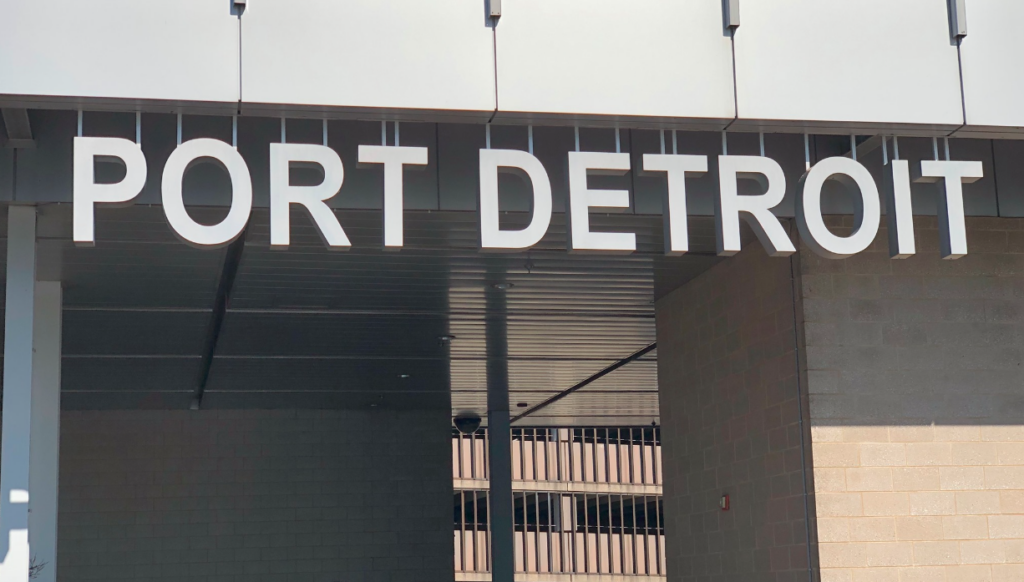
Michigan’s largest inland port, the Port of Detroit is located on the Detroit River in Wayne County as well as the navigable portions of the Rouge River. The Detroit/Wayne County Port Authority oversees the port, which is made up of multiple marine terminals for handling general, liquid, and bulk cargo as well as passengers. Each year, the Port Authority oversees more than eight million tons of cargo at 29 private and public sector terminal facilities in the Port of Detroit, including international and domestic commodities, which are shipped in and out of the port. The port is the third-largest steel-handling port in the nation. At the Port Authority’s own terminal, steel, aluminum, and project cargoes are handled for the support of the manufacturing community in Southeast Michigan. Now, the port is undergoing a decarbonization project which aims to reduce its environmental impact and improve air quality. The decarbonization project will be undertaken in partnership with Tunley Engineering and Southwest Detroit Environmental Vision (SDEV) and will involve a range of initiatives, including the implementation of renewable energy sources, the electrification of port equipment, and the use of cleaner fuels while ensuring residents and businesses in the area are involved and have input. Said Raquel Garcia, executive director of SDEV, “We are on board to – among other things – make sure the community understands what’s happening in their own backyard and that they have access to people leading the project.” SBN Detroit spoke with the executive director of the port, Mark Schrupp, about the project and its impact on tourism, area businesses, and more. Q: The Port of Detroit is going green with the goal of net zero by 2040. Can you provide some background on how you arrived here and how you are taking this on? A: Discussions originated in early 2022 with the Great Lakes St. Lawrence Governors & Premiers, looking at ways to help decarbonize the maritime industry. Our two overarching goals are to improve air quality and reduce greenhouse gas emissions. A lot of the ports on the West Coast and Europe have been doing good work for several years. The Midwest is a little behind but starting to accelerate. We reached out to state Sen. Stephanie Chang, and she has been a great supporter. She assisted in helping us to secure $1 million in state funding to undertake a study on where we are today and develop a plan to decarbonize. The big challenge is that the Port Authority does not have the authority to compel the private terminals, which are responsible for 95% of the cargo, to participate. We have been identifying incentives and working to persuade these terminals to develop a single plan, measure the greenhouse gas emissions, and develop strategies together. To start, we needed outside expertise. We put together a scope of work in December and put out an RFP and ended up partnering with Tunley Engineering, which has been eager to jump in and help. We have also been working heavily with Southwest Detroit Environmental Vision (SDEV) who – among other things – is helping us to connect to the community to ensure we understand what their interests are. You can’t take on just a decarbonization plan… in the port region where people work and live it’s also about air quality, vibrations, sound and particulate matter, and more. So, we are looking at these things and working to address them through best practices. Since April, we’ve been engaging with terminals to get a baseline report of greenhouse gas emissions for each terminal. Once finished, we will publish an interactive map for people to see the current carbon footprint. We are specifically looking at the carbon footprint of moving cargo in and off the water – not the industrial practices of the businesses. We are also looking at the cruise ships that we service at our downtown dock, and the impacts and the footprint of governmental entities that participate in the port, such as the Detroit Police Harbor Master, U.S. Army Corps of Engineers, and more. This is a good time to be taking all of this on. There is a lot of federal and state funding and tax incentives that help bring down the initial cost of switching fuel sources. We’ll be applying for grants to help the terminals move forward. Q: What other entities are you working with to take on this project? A: We are engaging with many organizations and local sustainability offices to help and support our efforts. We have been working with The Department of Environment, Great Lakes, and Energy (EGLE) to get data and take advantage of any grant opportunities to tackle air quality and particulate emissions. We have met with the EPA Region 5 office in Chicago to stay close in terms of funding opportunities and ways they can support our efforts. The International Maritime Organization has a 2050 plan in place and is setting standards around the fuel in the ships that move in international waterways. They are looking at cleaner fuel alternatives as well. The Port has a fueling station run by Waterfront Petroleum, and they are working toward a biodiesel fuel that can be used without having to change engines. Maritime infrastructure is very expensive and lasts a long time, so making changes needs to be planned carefully. Changing fuel to a lower carbon footprint, like biodiesel is a good first step because it doesn’t require any changes to ship engines. Zero-carbon fuels like hydrogen and ammonia will take more planning and investment. We can’t do it all at once but should do what we can as we work in the right direction. Q: Do you think this a unique undertaking for a port authority? A: Ports on the coasts have been working on this for some time. California has led the way and those ports are ahead of us. The Port of Cleveland has done work to reduce its carbon footprint. So, they are a little ahead of us, but
Working to Sequester Carbon Within Urban Wood
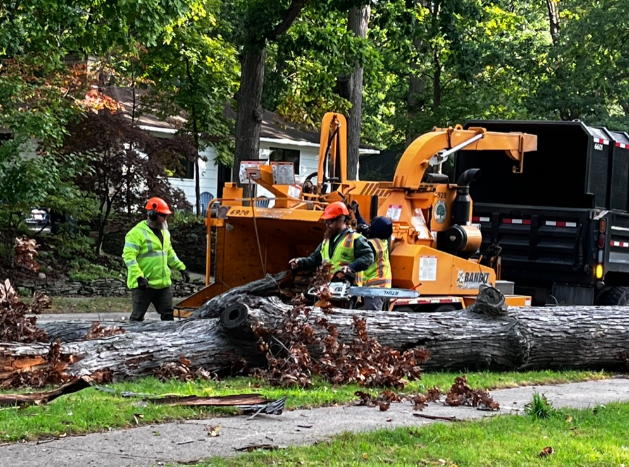
According to Tiffany Giacobazzi, Ann Arbor urban forestry & natural resources planning coordinator the Ann Arbor Forestry Department, the city of Ann Arbor loses about 600 trees per year. This reduces its carbon storage capacity dramatically. Much of the loss sits within furniture-grade urban lumber, meaning the trees can be repurposed for furniture or other long-lived urban wood goods that aid in sequestering carbon, versus being used for mulch or firewood or being diverted to landfills. Ann Arbor has partnered with Urban Ashes to implement its Circular UrbanWood Triconomy™ (CUT Model™). This model is meant to ensure that logs are put to their highest and best use to sequester as much carbon as possible. SBN Detroit spoke with Paul Hickman, Urban Ashes founder, CEO, and principal designer, and Tiffany Giacobazzi, Ann Arbor urban forestry & natural resources planning coordinator, to find out more. Q: What is Urban Ashes, and how did this program with Ann Arbor come to be? Hickman: I will provide a little background here for context because Urban Ashes has gone through a bit of an evolution. Initially, it started with a major career change for me by taking a job in California with one of the first sustainable lumber companies in the world. I eventually moved back to Michigan and started the original Urban Wood Project with three others in the early 2000s in response to the infestation of the emerald ash borer to help utilize trees beyond mulch, which was the most common response for the disposal of ash trees then and now. That was the impetus, but it immediately expanded to include all fallen urban trees and into Urban Ashes. Urban Ashes grew to sell to over 250 retail partners across 43 states over ten years, repurposing hundreds of tons of lumber into picture frames, furniture, and other items. From the beginning, our focus was also to work with formerly incarcerated individuals as a labor force, and that remains a strong component of the Urban Ashes business model today. Over time, the lack of wraparound (support) services (for workers) took a heavy toll, and eventually, we shifted entirely, shut down our manufacturing, and decided we needed to focus on building the infrastructure to develop the supply chain more thoroughly and consistently and grow the markets for utilization as well as develop the critically needed wraparound services needed for our target labor pool. So, we partnered with NextCycle Michigan and went through their FLOWS track which led to an EGLE grant. Then came the vision for the Circular UrbanWood Triconomy™. We were fortunate enough to work with the University of Michigan graduate students for 18 months to validate the viability of the model, and beginning in 2021, we have piloted it with the city of Ann Arbor. Q: How and why did the city of Ann Arbor come to change the way it processes trees and work with Urban Ashes? Giacobazzi: As the city has shifted with its sustainability goals and A2Zero plan, we started to look at how we could divert more out of the waste stream. We wanted to achieve the highest best use for materials that come out of the urban forest. So, we connected with Urban Ashes and partnered on this project. I have support all up and down the line from city administration which is really important. We are fundamentally changing the way we are dealing with urban wood and our urban forest so we must all be in support of this new process. Q: What does this program involve? Hickman: For years, all fallen urban trees in Ann Arbor (as is the case with most cities) were used for mulch or firewood. Accordingly, Ann Arbor loses approximately 1,111 metric tons of carbon every year and we were able to show them that by implementing the CUT Model™, we can capture upwards of 700 metric tons of that 1,111 and keep it in use and sequestered. The process involves cutting the trees down in a way that holds the most carbon and is best suited for the mills. The process also involves setting up the mills, facilities, contracts, and tracking methods, and then implementing everything. So, that is the work that Urban Ashes has been doing. Q: What do you, as the Urban Forestry and Natural Resources Planner, hope to achieve through Circular UrbanWood Triconomy™? Giacobazzi: I want to make sure the trees and lumber that have to come out in Ann Arbor go to the best use possible. I want it diverted from the waste stream and we are looking to lock up the carbon for as long as possible. We put such time and effort and thought into the development, care, and maintenance of our urban forest, it seems that the next natural best step is to complete the lifecycle of these trees and extend the usefulness of the trees once they die or have to come out. Q: In what ways has the lumber from Ann Arbor been repurposed? Hickman: Typically, the lumber goes to mills to be cut into slabs or dimensional lumber, kiln-dried, and processed, and then is sold as raw lumber to manufacturing or local woodworkers. The wood is then used for items such as furniture, frames, ceiling/wall cladding, flooring, household trim packages, decorative pieces, and more. Q: What other cities are you working with? Hickman: We are farthest along with Ann Arbor. But we are also working with Grand Rapids and are in talks with Detroit, Lansing, Traverse City, and several others outside of Michigan. In terms of businesses, we are working with a startup through Centrepolis called Lily Pad Labs out of Holland, Mich., to provide urban black locust for decking and tables for their autonomous electric boats. We are also working in conjunction with Centrepolis to help bring Daika Wood’s game-changing urban wood waste processes and products to Michigan. These are a few of the things we have happening at the moment. Q; In what ways do you think Urban