

Sustainability, Sourcing, and the Future of Michigan Manufacturing
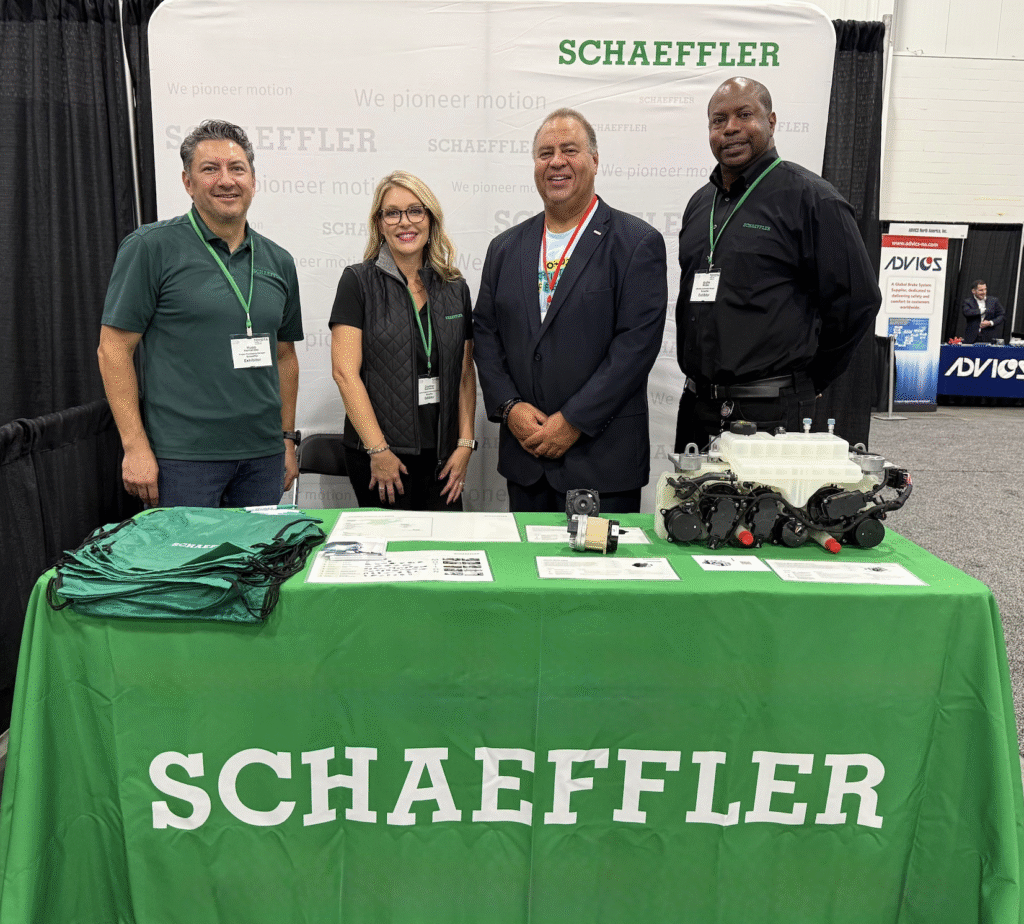
Schaeffler is a global automotive and industrial supplier with operations in Southeast Michigan, where it works across the region’s manufacturing and supplier network. As sustainability, decarbonization and supply chain resilience become central to how products are designed and sourced, the region’s role in shaping next-generation manufacturing continues to evolve. SBN Detroit interviewed Courtney Quenneville, who oversees supplier sustainability, to discuss the realities of sustainable sourcing, what decarbonizing a supply chain looks like in practice, and how suppliers in Southeast Michigan can remain competitive amid changing expectations. Q: Southeast Michigan is historically known for automotive manufacturing. As supply chains evolve, what role do you see this region playing in the next generation of sustainable manufacturing and sourcing? A: Southeast Michigan has always been the heart of auto manufacturing, and I see this as a benefit to how we shape the future of sustainable supply chains. Our regional engineering expertise gives us the ability to embed sustainability standards into the earliest phases of design and production. We’re also fortunate to have many local organizations working to raise awareness and build connections across supplier tiers. This mix of awareness and collaboration is what creates the ripple effect that will carry sustainable manufacturing and sourcing into the next generation. Q: What does “decarbonizing a supply chain” actually look like in practice? Where does it begin and what makes it difficult to scale responsibly? A: Decarbonizing a supply chain is being intentional about reduction measures throughout every step, from raw materials being used all the way to delivery methods. It begins with transparency – understanding total emissions across the supply chain and then working directly with suppliers to find practical ways to reduce scope 3 emissions, especially purchased goods and services. The challenge is that not every supplier is at the same point in their sustainability journey; some are already investing in renewable energy or using greener materials, while others are just starting to measure their footprint. It’s important to understand where each supplier partner is at and help them take the next step. Scaling responsibly isn’t about expecting immediate results but building progress together. Q: What are the toughest sustainability challenges suppliers in this region are currently facing? A: Right now, suppliers in this region are facing a lot of uncertainty — tariffs, supply chain shortages, and constant pricing pressures. It’s no surprise that many suppliers feel stuck in crisis or response mode, which makes it harder to focus on long‑term sustainability. At the same time, these challenges highlight why resilience and sustainability go hand in hand. By working closely with suppliers and helping them take practical steps forward, we can show that sustainability isn’t another burden — it’s part of how they stay competitive through all of this change! Q: As more companies move toward science-based targets and emissions reductions, how will this shift affect procurement practices and supplier relationships? A: Just as Schaeffler has done, more companies will commit to science‑based targets, and sustainability will naturally become part of how they source. Procurement will no longer be just about cost and quality. Suppliers will need to be transparent about their emissions in the sourcing process as well as share future reduction levers. This visibility is crucial if we expect to continue reducing impact across the supply chain. The real shift is in relationships. Customers and suppliers will need to work together more than ever to accomplish shared sustainability goals. Once suppliers see how their sustainability efforts open opportunities, they’ll lean in further. Aligning with our suppliers on these initiatives will help determine the strength and future of our partnerships. Q: You’ve helped exceed renewable energy targets in the Americas. What insights have those efforts revealed about what’s working and what’s not? A: It has been encouraging to see the number of suppliers in the region that already have renewable energy plans in place — some are operating at 100% renewable, while others have clear roadmaps to get there. And importantly, they see that we are not the only customer requesting this information, which reinforces for suppliers that renewable energy is now a business expectation, not a side initiative. At the same time, we are learning that cost concerns can slow renewable energy adoption. Some suppliers are weighing the financial impact of renewable energy, which means timelines vary. That’s why our approach is to understand and help suppliers move forward from their current stage. We want progress that is collaborative and realistic. Q: In terms of equity and inclusivity in sourcing, how do supplier diversity and sustainability intersect and why does that matter for economic resilience in Michigan? A: In recent years, more automotive companies have aligned supplier diversity with their Environmental, Social, and Governance (ESG) initiatives — and in my view, it’s the perfect fit. The ‘social’ pillar is about community development and corporate impact, and nothing strengthens communities more than fueling the local economy. Here in Michigan, we’re fortunate to have thousands of small businesses that are ready to bring innovation and resilience to our supply chains, and investing in these businesses helps build more sustainable communities. With growing pressures to localize production, this is the right moment for Michigan businesses to demonstrate their value. Looking forward, keeping a strong network of local suppliers will be critical, not only for resilience and competitiveness, but also for advancing sustainability across our supply chains and communities. Q: What does it take to ensure traceability and accountability across complex, multi-tier supply chains? A: Traceability is about visibility and accountability is about relationships – and transparency is key for both. It means having the knowledge of your direct suppliers and where materials come from upstream, backed by strong internal tracking and a sustainability team working towards a shared goal. Also, because of the complexity of the multi-tier supply chains, accountability must be handled through collaboration with suppliers – things like industry standards, shared audits, and supplier engagement. Q: Looking ahead five years — what shifts do you expect to see in sustainability requirements and expectations for
How Does Meijer, One of the U.S.’s Largest Private Companies, Approach Sustainability?
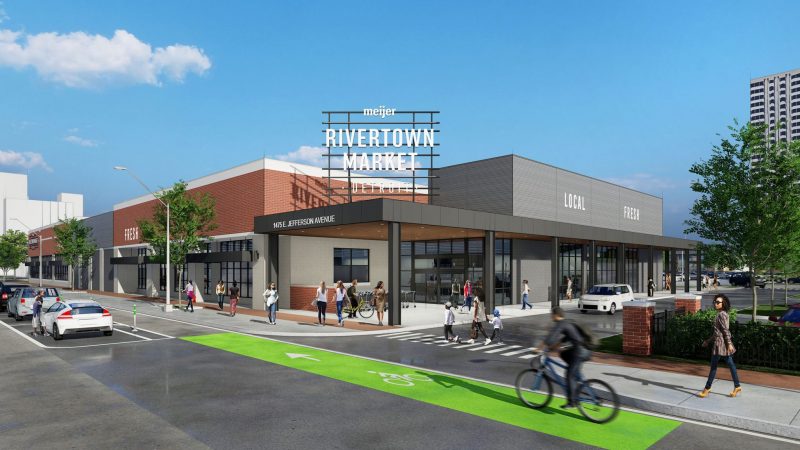
SBN Detroit interviews Erik Petrovskis, Director of Environmental Compliance and Sustainability for Meijer, the Michigan-based retailer with more than 250 stores and 70,000 employees in six states throughout the Midwest. The company ranks 13th on Forbes’ 2021 Largest Private Companies list. Petrovskis leads environmental management across Meijer, including remediation, due diligence, and multimedia compliance programs, and represents the company’s position on regulatory matters. Here he shares some of the efforts, challenges, and goals that are in place, and the opening of the Q: Meijer has a goal of reducing 50% of absolute carbon emissions by 2025 – Can you elaborate and share what actionable items you are working on toward that? A: Meijer set a goal to reduce our absolute carbon emissions by 50 percent by 2025. This reduction represents the emissions over which Meijer has operational control and includes things like our fuel, electricity, natural gas, and refrigerant usage. We have many ongoing projects to reach the reduction goal, including energy efficiency improvements, refrigerant leak detection systems, and fuel efficiency strategies for our fleet. Our virtual power purchase agreements (VPPAs) for two renewable energy fields will also support reaching a 50 percent reduction. Q: Tell us about Meijer’s investment in the Texas-based Lacy Creek Wind Energy Center and how it pertains to Meijer’s carbon emission reduction goals. A: Our investment is structured as a virtual power purchase agreement (VPPA). In this agreement, Meijer commits to purchasing much of the energy generated from the wind farm and receives renewable energy credits (RECs). This project is coupled with the Pisgah Ridge Solar project, which utilizes the same type of agreement. The RECs certify our purchase of renewable energy and therefore represent a reduction in overall carbon emissions from the energy we purchase. Q: When did Meijer initiate sustainability practices? A: Meijer was an early adopter of green initiatives. Fred Meijer, who led the company for more than 40 years, vowed to “Leave the world in a little better shape than when I entered it.” In fact, Fred Meijer spoke at the first Grand Rapids Earth Day celebration in 1970, and company-wide recycling, energy, and waste reduction programs were in place by 1973. Since then, we’ve undertaken many sustainability-related projects, like our plastic bag recycling drop-off, installing EV chargers at select stores, and sourcing responsible seafood. Among others, these efforts became formalized when Meijer established its first sustainability plan in 2014. At Meijer, we understand that to be a good company, we must be a good neighbor. We integrate environmental sustainability into our daily operations, not only because it makes good business sense, but because it aligns with our values and mission of enriching lives in the communities we serve. Our sustainability program has evolved to prioritize four pillars: carbon emissions reduction, food waste reduction, circular economy, and Great Lakes Stewardship. Q: Regarding the Detroit Rivertown location in Lafayette Park, what community partnerships have been put in place since opening? A: Since the store opened in 2021, Meijer has supported more than 20 community organizations, including Junior Achievement of Southeastern Michigan, Bees in the D, The Better Detroit Youth Movement, Pure Heart Foundation, and Greening of Detroit. Q: Are there any other sustainability efforts that are unique to the Rivertown location? A: The Rivertown Market includes electric vehicle charging as an amenity to our customers. This is part of our greater network of EV chargers, which includes more than 70 stores in our footprint. Rivertown Market will also participate in our Gutter Bin pilot program, which is part of our Great Lakes Stewardship efforts. The Gutter Bins will catch garbage and other debris from our parking lots before it enters the waterways. The Council for the Great Lakes Region will coordinate metric tracking and evaluation of the initiative, which is occurring across nine Meijer stores. Q: How does this location and Meijer overall deal with food waste? A: Meijer aims to keep food waste out of landfills. This begins with our ordering process, in which we optimize the quantities ordered to reduce overstock. However, we also have partnered with several organizations to find other solutions. For example, we work with Feeding America, and their network of food banks across our footprint, on our Food Rescue program to provide food nearing its sell-by date to those in need. In 2021, we donated 13.7 million pounds of food through this program. We also rolled out Flashfood program, which acts as a virtual clearance rack for food nearing its sell-by date. This program is not currently available at Rivertown Market but has already diverted more than 1 million pounds of food from potentially entering landfills. Also, any food that can no longer be consumed, including things like food scraps and rotten produce, is picked up from our stores, distribution centers, and manufacturing facilities by third-party vendors, who process the waste into animal feed and compost. Q: What are your biggest challenges when it comes to reaching your sustainability goals? A: We’re lucky to have had strong support both internally and externally regarding our sustainability goals. However, one initial challenge with ours was leading a cohesive path forward. The formation of our Sustainability Council united the company and allowed sustainability to move out across all functions of the business. The Sustainability Council, which is made up of representatives from across the company’s business areas, has served as a powerful mechanism in moving our efforts forward and achieving goals with strong cross-functional collaboration. Q: From your perspective, what is the role of businesses in Detroit in terms of sustainability overall for the city? A: Business plays a key role in sustainability on a global scale. Specifically in Detroit, a focus on business sustainability is essential for the city’s renaissance to be successful and enduring. Meijer is grateful to have the opportunity to support the city’s revival, taking both environmental and social sustainability into account. Q: What businesses and partners and vendors are you working with in Detroit who are doing it well? A: Meijer features