
Rethinking Hydrogen Production
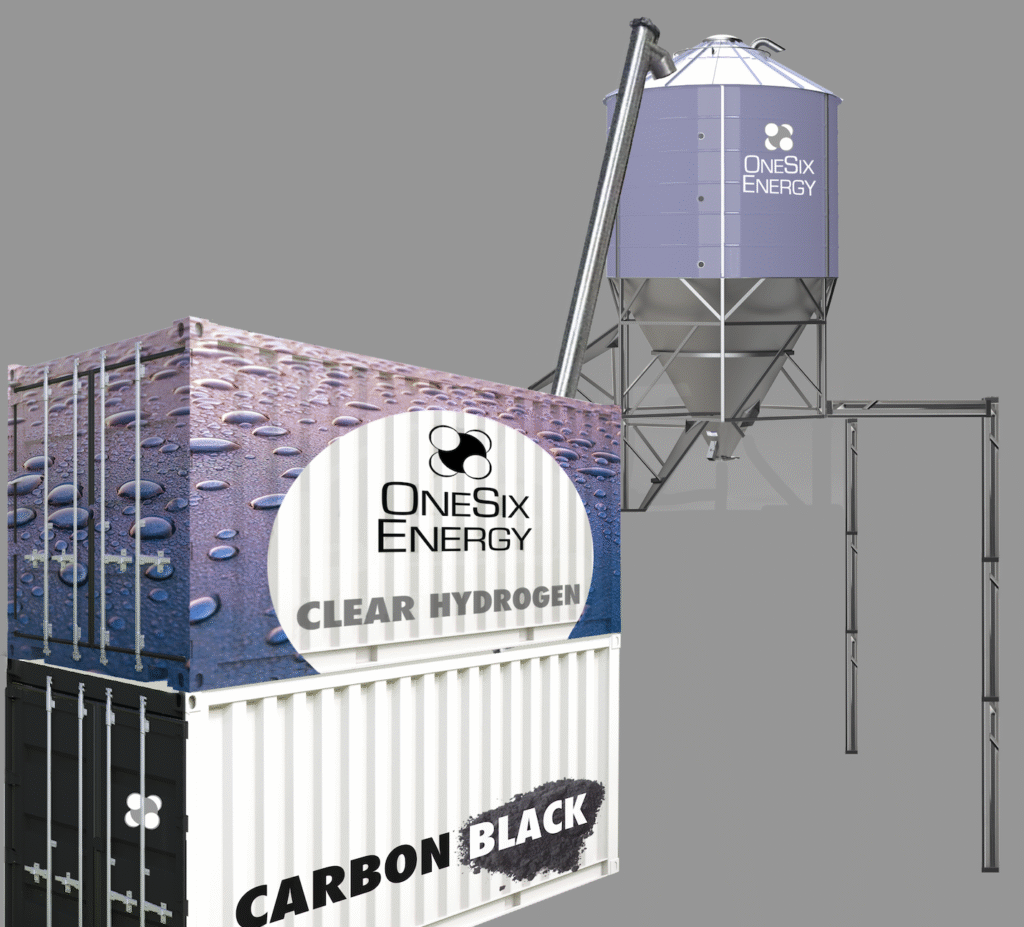
Detroit-based OneSix Energy is a clean-energy technology company focused on advancing a lower-carbon approach to hydrogen production. Headquartered at Newlab in Detroit, the startup is developing a proprietary methane pyrolysis system designed to produce hydrogen without carbon dioxide emissions, while also generating solid carbon as a co-product. SBN Detroit interviewed with cofounder Stefan Sysko about the company’s origins, its approach to hydrogen production, and why Detroit is positioned to play a leading role in the next phase of the energy transition. Q: Can you give us the elevator version of OneSix Energy — how it got started, the impetus behind it, and the approach you’re taking to hydrogen production? A: OneSix Energy really began with my co-founder, Dan Darga, who back in 2002 was working at General Motors. He read about the hydrogen economy and immediately knew he wanted to be part of it. He transferred to GM’s fuel cell division in upstate New York, then later worked for a solid oxide fuel cell company. While there, he kept running into the same problem: carbon buildup clogging systems. His perspective was that we were fighting nature instead of working with it. That led him to start thinking differently about surfaces, materials, and how carbon behaves. Dan eventually left to work at NASA’s Jet Propulsion Laboratory, where he learned how to take ideas from concept to deployment in extreme, real-world conditions. He combined these two experiences, refined them, and approached me. I’ve been a lifelong entrepreneur, and I felt I had one more startup in me — one that could genuinely address a major global challenge. We incorporated OneSix Energy nearly two years ago, bootstrapped the initial design and modeling, filed a patent that’s now pending, raised a friends-and-family round, built and independently tested a prototype, and are now moving toward a pilot phase. Q: What problem is hydrogen uniquely positioned to solve that other energy carriers can’t? A: Hydrogen is incredibly energy-dense by mass, and when it’s used, the only byproduct is water vapor. It’s versatile — it can be used as a fuel for power generation or as a chemical feedstock. Hydrogen has been called “the fuel of the future” for decades but it’s difficult and expensive to produce cleanly. Today, about 90 percent of hydrogen is made using steam methane reformation, which is cheap but very dirty — roughly 11 tons of CO₂ for every ton of hydrogen produced. Electrolysis, on the other hand, is clean but extremely expensive and water-intensive. It requires fresh water, significant electricity, and even when powered by renewables, you lose about half the energy in the process. When you look at sectors like data centers — which already consume enormous amounts of electricity and water — electrolysis actually worsens the problem. Our system is different. We’re off-grid. We recirculate a fraction of the hydrogen we produce to power our reactor, so we don’t need external energy, and we don’t use water. In fact, we generate fresh water as a byproduct. Q: Can you explain methane pyrolysis and what OneSix Energy has developed? A: Methane pyrolysis involves taking methane — CH₄, the main component of natural gas — and breaking it into hydrogen and carbon using high temperatures in the absence of oxygen. Because there’s no oxygen, you don’t form CO₂. Instead, you produce solid carbon. That solid carbon – or “carbon black” – is actually valuable. It’s used in products like tires, shoe soles, and industrial materials. There’s a roughly $40 billion global market for carbon black today. Our goal is to upcycle that carbon while producing hydrogen at a lower cost than electrolysis, without water use or external energy input. Q: Hydrogen production often involves trade-offs. What innovations are helping overcome those barriers? A: Right now, the industry is stuck between options that are either cheap and dirty or clean and expensive. What’s changing is the recognition that we need new pathways — not just incremental improvements. Innovations in materials science, reactor design, and system efficiency are making approaches like methane pyrolysis viable at scale. The key is eliminating emissions without introducing new resource constraints. Q: Where do you see the earliest and most impactful applications for clean hydrogen? A: Two areas stand out immediately: data centers and shipping ports. Ports face increasing regulatory pressure because of emissions from ships idling while docked. Hydrogen-powered equipment and shore power could significantly reduce pollution while keeping operations moving. We also see opportunities in power generation for buildings, factories, and industrial facilities. Long-term, hydrogen fuel for heavy-duty transportation — Class 8 trucks, for example — is very compelling. Electrifying those vehicles requires massive and expensive batteries that reduce payload capacity. Hydrogen avoids that issue. Q: Why build a clean-energy technology company in Detroit? A: Detroit put the world on wheels. There’s no reason it shouldn’t lead the energy transformation. We’re at Newlab, surrounded by engineers, manufacturers, and people who understand how to scale physical systems. Detroit is a perfect microcosm — a place where you could demonstrate how an entire city transitions to clean energy. Plus, I was born and raised in the city, so it’s home to me. Q: What misconceptions do you encounter most often about hydrogen? A: The first is safety. People immediately think of the Hindenburg. But hydrogen is actually lighter than air and dissipates quickly, whereas gasoline fumes stay low and linger. When you look at safety data, hydrogen performs very well compared to other fuels. The Hindenburg taught us the hard way that we need to develop unique handling procedures for hydrogen – and we have. Q: What should Michiganders understand about hydrogen’s role in a sustainable energy future? A: Michigan potentially has significant natural hydrogen resources, which should be explored. But we need to remember that it will likely be years, if not decades, before that becomes viable, We also have the Great Lakes — which must be protected. If all hydrogen today were produced via electrolysis, the water consumed would be equivalent to Lake St. Clair
Beacon Manufacturing – Supporting LEV Innovation at Newlab

Newlab at Michigan Central is home to a new 10,000-square-foot center for manufacturers of light electric vehicles (LEVs) – two- and three-wheeled vehicles mostly used for short distances, such as e-scooters and e-bikes. The center, dubbed “BeaconLab,” is operated by the newly created Beacon Manufacturing and will operate as a prototyping and logistics services manufacturing consultant, coordinator, and manufacturing hub for startups. It is equipped with several bays of assembly stations and state-of-the-art advanced machinery for robotic wheel building, laser-tube cutting, and robotic welding, to accelerate startups’ journey from concept to scale. The company leases the space from Newlab and is paid a fee for service by clients. Beacon Manufacturing also owns the Detroit Bikes brand, which it purchased in May from Cardinal Cycling Group. SBN Detroit interviewed CEO Gary Thornton, who previously was general manager of Detroit Bikes, about plans for the center, trends in LEV mobility, and other topics. Q: Beacon Manufacturing is focused on prototyping and logistics services for light electric vehicle (LEV) manufacturers. Explain what this entails. A: Our work at Beacon Manufacturing is twofold. First, we focus on prototyping, helping startups move from concept to tangible products. We take initial designs and create physical prototypes, allowing companies to refine their ideas and demonstrate proof of concept. The second part involves logistics services, acting as a third-party logistics (3PL) provider. We rent warehouse space specifically tailored for LEVs. Our team manages everything from storing products to shipping them out, ensuring each vehicle is operational before it leaves the facility. This includes handling specific challenges related to LEV batteries and ensuring compliance with regulations. Q: What types of companies and vehicles do you work with? A: We primarily collaborate with companies focused on last-mile delivery solutions. These startups are experimenting with new vehicle designs – e-scooters, e-bikes, and even electric tricycles – to solve urban transportation issues. One example of our work is with Civilized Cycles, a Newlab-based startup developing an e-bike with a tricycle and trailer attachment. Their solution addresses congestion in cities like New York, where specific zones impose fees on larger vehicles. Using a smaller LEV, they can transport goods efficiently without contributing to traffic or emissions. Q: What is the market potential for LEVs? A: The LEV market is massive and largely untapped. The need for efficient, low-emission transportation in urban areas is growing rapidly. We’re seeing interest from companies large and small, all looking to shift away from traditional vehicles. Cities like New York, Paris, and others are exploring ways to reduce congestion and improve air quality by shutting down portions of the city to standard vehicles or charging usage fees. LEVs fit perfectly into this evolving landscape, providing a practical and sustainable solution for short-distance travel and deliveries. Detroit’s ecosystem is ideal for LEV development with its roots in automotive design and manufacturing. Within a 20-mile radius, you can find suppliers for almost any component. We are working on LEVs as mentioned to address the last mile of delivery or traffic congestion, and we are currently working on an extremely rugged LEV that can be used to deploy power grids remotely for farmers and everything in between. There is a constant quest to come up with ideas to push the limits within Newlab and Southeast Michigan. Q: What challenges do LEV manufacturers face when scaling production? A: The biggest hurdle is cost. Traditional auto suppliers aren’t set up for small runs, so startups often face prohibitively high quotes. We are set up to focus on the individual manufacturing processes and tailor solutions to their scale. Another challenge is managing expectations. Many entrepreneurs want a final product that’s perfect, but early prototypes need to prioritize function over aesthetics. Our role is to guide them through this process, ensuring they have a viable product to show investors or test in the market. Q: What types of collaborations do you facilitate, and how do these impact LEV development? A: We enable companies to focus on their core strengths, such as design and marketing, by handling their logistics, manufacturing, and shipping needs. Currently, our warehouse hosts four electric motorcycle brands, two e-bike brands, and even an electric snowmobile company. These collaborations foster a supportive environment where different players in the LEV space can learn from each other, share resources, and accelerate their growth. Q: How do you see the LEV market evolving in the next 5–10 years, particularly in Southeast Michigan? A: The LEV market is poised for explosive growth, much like the e-bike market has experienced. The acceptance of battery-powered tools and vehicles is spreading quickly. From electric lawnmowers to chainsaws, we’re seeing a cultural shift toward cleaner, more efficient technologies. In Southeast Michigan, the manufacturing expertise built over decades in the auto industry provides a strong foundation for LEV innovation. Detroit is uniquely positioned to become a hub for LEV development and production. Q: How has Newlab enhanced Beacon Manufacturing’s ability to innovate and scale? A: Newlab has been transformative for our operations. The state-of-the-art machinery and resources available here – CNC (computer numerical control) machines, cleanrooms for electronics, woodshops, and metal shops – allow us to tackle complex manufacturing challenges. The collaborative environment also plays a crucial role. Being part of a community of innovators means we’re constantly learning and pushing the boundaries of what’s possible in LEV manufacturing. What are your plans for BeaconLab as it relates to the LEV industry in Southeast Michigan and beyond? A: We’re focused on scaling our operations to meet the growing demand. At Newlab, we’ve set up five fully stocked workbenches that startups can rent to assemble their vehicles. This hands-on space allows entrepreneurs to bring their concepts to life. Additionally, we’re expanding our offsite facilities to accommodate larger manufacturing runs. Our new 20,000-square-foot warehouse will support startups ready to scale from prototypes to larger production runs of 100 or even 1,000 units. Also, I’m extremely optimistic about Detroit’s future in this space. The city’s deep manufacturing expertise, coupled with the growing demand for