
In the manufacturing world, sustainability is increasingly defined not just by recycling, but by what kind of recycling. For PolyFlex Products, based in Farmington Hills and part of Nefab Group, the future lies in creating closed-loop systems where materials are reused for equal or higher-value purposes — not simply “downcycled” into lower-grade goods.
PolyFlex, which designs and manufactures reusable packaging and material handling solutions for the automotive and industrial sectors, is investing in circularity across its operations. The company’s goal is to ensure that plastics and packaging materials stay in circulation longer, retain value at end-of-life, and contribute to a more resilient supply chain.
SBN Detroit interviewed Director of Sustainability Richard Demko, about the shift from downcycling to true circularity, the technical and cultural changes required, and what this evolution could mean for Michigan’s workforce and manufacturing economy.

Q: What does “recycling for equivalent or higher use” actually look like in practice — and why is moving away from downcycling so important?
A: Circularity, at its core, means manufacturing, recovering, and returning materials at end-of-life back into feedstock form to create something new. It’s about closing the loop — but we have to start with the basics: improving capture rates and diverting more material from landfills.
The challenge is that recovery alone doesn’t guarantee success. One of the biggest barriers we face is the lack of demand for recycled feedstock. You can pour your heart into developing a fantastic recycling process, but if there’s no market for that material, the effort falls short.
That’s why we need collaborative extended producer responsibility (EPR) systems that stabilize demand and make recycled regrind valuable, instead of punitive frameworks that simply point fingers. No single stakeholder can shoulder all the responsibility for circularity. It’s an ecosystem.
Downcycling, meanwhile, is more like an off-ramp — it keeps materials out of landfills for a time but doesn’t truly close the loop. The goal is to return materials to their highest possible value so they can re-enter the economy at an equivalent or higher use.
Q: In automotive supply chains, what opportunities do you see for keeping plastics and industrial packaging materials in circulation longer?
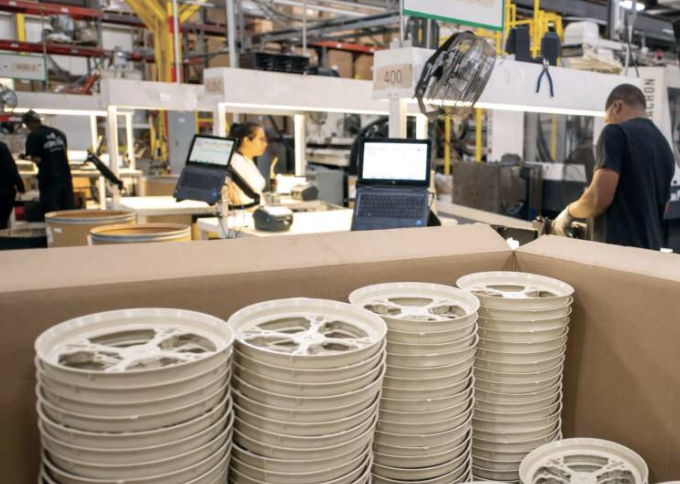
A: Analyzing packaging fleets at the component level and asking what can be reused, what needs to be redesigned, and what truly has reached end-of-life is a great place to start. Pallets and lids are good examples. Often, those parts can be redeployed across multiple programs if you plan for it upfront.
Traditionally, packaging was treated as disposable — once a product launched, everything associated with it ended up scrapped. Now we’re seeing a paradigm shift. Companies are designing for recyclability and reusability from the start. Some are even creating universal packaging platforms that can be shared across product lines.
I like to say that carbon has become a kind of currency. When companies invest in reusable packaging, the return isn’t always measured dollar-for-dollar — it’s measured in carbon reduction. Those gains directly support broader sustainability goals, and, in some cases, they even help manufacturers comply with regulations that exempt circular packaging streams from waste classifications.
At PolyFlex, we’ve already helped our customers divert several million pounds of plastic from landfills simply by applying design-for-recyclability principles and re-use strategies. It’s a shift toward smarter design — and it’s happening fast.
Q: What are the biggest technical challenges in turning used materials back into high-value products — and where is the industry making progress?
A: The biggest technical hurdle is consistency. Regrind blends vary depending on their source, and that variability can affect performance. The key is to manage it intentionally — introduce recycled feedstocks in small increments, fine-tune the process, and ramp up gradually.
On the positive side, both equipment and operators are getting smarter. We’re seeing tremendous innovation in process technology that allows manufacturers to work with higher recycled content without sacrificing quality or throughput.
Q: How do you design a product from the beginning with its second or third life in mind?
A: It starts with identifying components that can become standards — like pallet dimensions or lid configurations that can be used across multiple applications. The more we can standardize, the more opportunities we create for re-use.
It also requires a macro mindset. Instead of thinking in one product lifecycle, you think in systems. If you’re shipping a component from Detroit to Arizona, ask what can be sent back in that same flow. Can the packaging be refilled, reused, or repurposed? That kind of circular thinking transforms how supply chains operate.
Material choice is another major factor. Corrugated packaging might last only a few trips, while plastics designed with the right impact resistance, UV stability, and weather tolerance can circulate for years. It’s about matching the material to its environment and expected lifespan.
Q: Are there specific materials where circularity is advancing fastest — and others where it’s still a struggle?
A: Rigid plastics — things like pallets, totes, and containers — are advancing the fastest because they’re high volume and easier to process. PET, HDPE, and polypropylene are particularly strong candidates because they can be reprocessed multiple times.
Where we still struggle is with single-use, multi-layer packaging — the snack wrappers, films, and laminates that mix materials for barrier protection or freshness. Those layers make recycling extremely difficult. There’s exciting research happening in that space, but large-scale solutions are still developing.
Q: What does a more circular plastics industry mean for jobs and skills in Southeast Michigan?
A: It means opportunity — but it also means we need education. There isn’t a single university or technical program I know of that teaches recycling as part of its core curriculum. You can find polymer science programs but not recycling operations or circular systems.
Training people for this industry is critical. If you lose a skilled recycling technician, you can’t just hire a replacement from a temp agency. It takes months or even years to become proficient. And with plastics recycling, mistakes are costly — something as simple as mixing PVC with polypropylene can contaminate an entire batch.
As the circular economy grows, we’ll need a new generation of workers who understand these systems — people who see recycling not as waste management, but as manufacturing in its own right.
Q: If Detroit succeeds in building a robust circular manufacturing ecosystem, what might this region look like ten years from now?
A: If we do this right, Detroit could become a model for circular manufacturing. Imagine a network of advanced material recovery facilities equipped with cutting-edge sorting technology, integrated with pre-established markets for recycled feedstocks.
That kind of system could sustain itself — creating jobs, driving innovation, and keeping valuable materials out of landfills. With the strength of our automotive sector and Michigan’s legacy of industrial innovation, we’re in a prime position to lead.
The next decade is really about infrastructure and collaboration — aligning technology, education, and investment. If we make the right moves now, this region can show the country what a truly circular economy looks like.

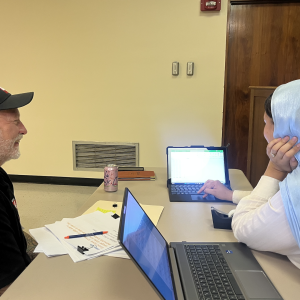
In November 2023, the City of Detroit enacted an Energy and Water Benchmarking Ordinance requiring buildings 25,000 square feet and larger to annually report their energy and water usage to the city. The policy focuses on transparency, giving building owners and city leaders insight into how buildings perform and where opportunities may exist to improve efficiency and reduce costs. SBN Detroit interviewed Maria Galarza, Deputy Director of the...
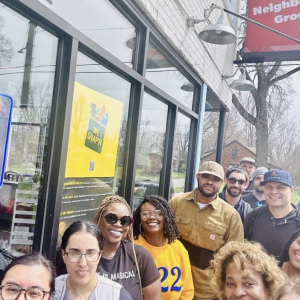
Detroit-based nonprofit Elevate focuses on the intersection of energy equity, housing stability, and workforce development. Through community partnerships and programs that connect residents with energy-efficiency upgrades, education, and job-training opportunities, the organization works to strengthen neighborhoods while helping families reduce costs and improve living conditions. SBN Detroit interviewed Shawna Forbes Henry, Director of Community Programs at Elevate, about the broader implications of energy access, the structural barriers communities...
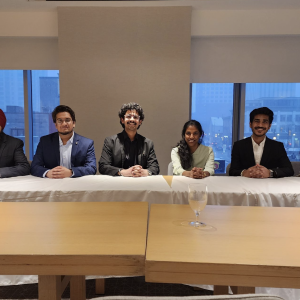
The Green Business Lab, founded in 2002 by Samantha Svoboda, aims to help organizations strengthen decision-making about sustainability through immersive business simulations and strategic advisory services. Working with leadership teams across industries, the Lab creates structured environments where executives can explore how environmental, operational, and market forces intersect with core business strategy. Over more than two decades, the Green Business Lab has worked with companies toward moving sustainability...