
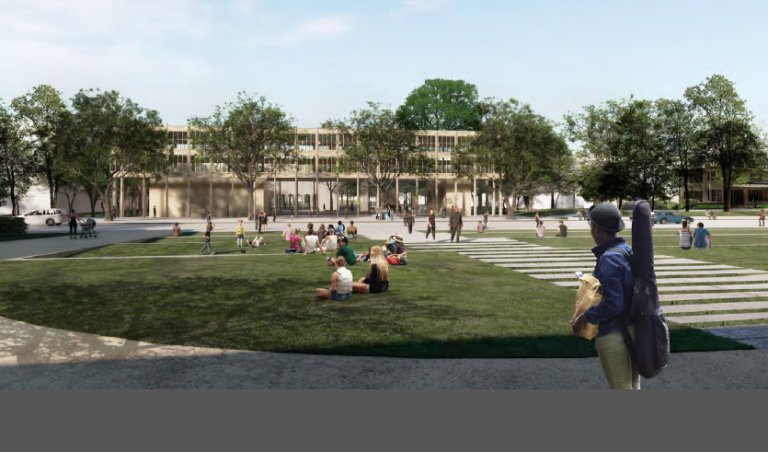
Midtown Detroit Inc. (MDI) recently received a $12 million appropriation from the State of Michigan that will be used to support the Cultural Center Planning Initiative – a strategic effort to reinvent the public space that connects 12 cultural organizations across an 83-acre site.
The collective goal is to create a more vibrant, connected, accessible, and sustainable district for future generations including stormwater infrastructure solutions, new parking with EV charging stations, safer pedestrian experiences, beautiful landscaping, lighting, diverse public art, free public Wi-Fi, and programming.
The institutions include The Carr Center, Charles H. Wright Museum of African American History, College for Creative Studies, Detroit Historical Museum, Detroit Institute of Arts, Detroit Public Library, Hellenic Museum of Michigan, International Institute of Metropolitan Detroit, Michigan Science Center, The Scarab Club, University of Michigan and Wayne State University.
SBN Detroit interviewed Susan Mosey, Midtown Detroit’s longtime executive director, to find out more.
Q: How did the $12 million from the state come to be?
A: We lobbied hard with the DIA and Science Center and all the institutions collaboratively. We took multiple trips to Lansing to sell the vision to legislators and the appropriations chairs.
Ultimately, I think all parties understand that this combined collaborative vision will have a big impact on Detroit and the state of Michigan. The time is right for executing a bold visionary plan and creating a more compelling arts and culture experience for visitors and residents.
Q: What is the impetus behind creating this cultural hub?
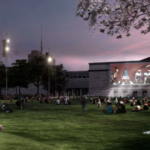
A: We have a great set of institutions that sit side-by-side that have never been connected. Each offers tremendous assets and programming and a broad demographic of visitors but until now, there has not been an intentional strategy to unite and connect all of them and offer a vibrant and thriving cultural destination.
This initiative will allow us to use the entire set of institutions to drive visitors and provide more holistic programming and services. We will be able to market this full footprint, not the singular institutions as has been done in the past.
The initiative also inherently offers the opportunity to create new opportunities for sustainability.
Q: To that end, how important is incorporating sustainability in this project?
A: It’s huge. It’s an integral and foundational aspect in all of the thinking, planning, and execution.
We have secured a team of architects, landscape architects, and environmental engineers including Ann Arbor-based Akoaki Architecture, Agence Ter out of Paris, and Drummond Carpenter. Each of them focuses on sustainability as a priority.
This will play itself out in many ways. One tangible and immediate example is stormwater management. This area has suffered significant damage due to flooding, so this is a top priority, and we are working with the city on this already.
Managing stormwater with new infrastructure and design will help mitigate flooding, but also lends to redeveloping our streets and landscaping toward sustainability overall.
The first phase of the project will result in an expansion of the existing tree canopy with 136 new trees.
Q: What about accessibility and walkability?
A: Currently it’s a challenge to navigate between institutions. The layout does not facilitate a holistic experience.
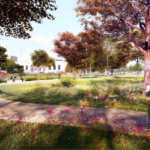
So, we’ll incorporate wayfinding and are looking at how to create walkways that facilitate a better experience. The width of streets will be reduced to increase greenspace and walkability.
The surface parking behind the DIA will be converted to a large green space. The first phase includes a state-of-the-art underground parking garage that will include charging stations, ADA accessible, and more.
Q: What are the economic impacts for businesses in the area and the area as a whole?
A: Overall, we expect more foot traffic for restaurants, retailers, and such in the area.
Further, there are a lot of undeveloped spaces and vacant lots that will be more marketable for development for new businesses to come in.
I see the opportunity for more foot traffic downtown as well since people travel between midtown and downtown frequently now that the M1 rail is free of charge.
Q: Is there a job creation aspect?
A: I think creating this vibrant space means everybody benefits and we should see continued job growth within the institutions.
Also, potential new development in the area points to more opportunities for this.
Q: Is there a recruiting aspect in terms of bringing more professionals into the city?
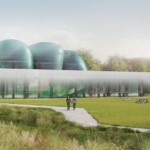
A: Yes. We know that companies care about arts, culture, and education. Offering easy access to these resources and experiences makes any city or place stronger and more desirable to live and work in. We have not done enough to get the word out about our collective resources. So, I think creating this vibrant space with enticing programming and walkability will be impactful.
Q: What does the first phase look like – when can we expect to see what’s different and what will that be?
A: The new state-of-the-art underground parking deck will replace the abandoned parking lot in that area. It will service all the institutions and be open to the public and accessible to all.
Phase one also includes the stormwater management system and landscaping.
Ultimately, we’ll focus on this zone and use it as a pilot to be repeated in other parts of the district.
Q: You’re retiring from your job at the end of the year, and your leadership has been pivotal to Midtown’s evolution. What are you personally most proud of?
A: Establishing a large number of both national and local historic districts and preserving dozens of historic properties up and down the Corridor many of which were threatened by neglect or fire.
Be sure to subscribe to our newsletter for regular updates on sustainable business practices in and around Detroit.


Detroit-based nonprofit Elevate focuses on the intersection of energy equity, housing stability, and workforce development. Through community partnerships and programs that connect residents with energy-efficiency upgrades, education, and job-training opportunities, the organization works to strengthen neighborhoods while helping families reduce costs and improve living conditions. SBN Detroit interviewed Shawna Forbes Henry, Director of Community Programs at Elevate, about the broader implications of energy access, the structural barriers communities...
The Green Business Lab, founded in 2002 by Samantha Svoboda, aims to help organizations strengthen decision-making about sustainability through immersive business simulations and strategic advisory services. Working with leadership teams across industries, the Lab creates structured environments where executives can explore how environmental, operational, and market forces intersect with core business strategy. Over more than two decades, the Green Business Lab has worked with companies toward moving sustainability...
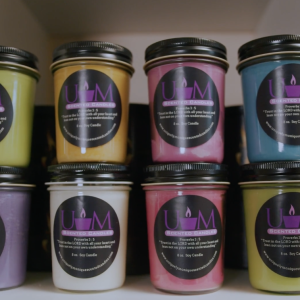
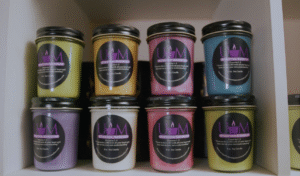
Unique Monique Scented Candles, a Detroit-based business founded by Monique Bounds., aims to produce candles and household products with clean ingredients and local supply chains. What began as a personal hobby during college has evolved into a full-time venture producing coconut oil and soy-based candles made with essential oils and locally sourced materials. SBN Detroit interviewed Bounds about launching a sustainable product line, sourcing challenges in Michigan, and...