

The Green Business Lab, founded in 2002 by Samantha Svoboda, aims to help organizations strengthen decision-making about sustainability through immersive business simulations and strategic advisory services. Working with leadership teams across industries, the Lab creates structured environments where executives can explore how environmental, operational, and market forces intersect with core business strategy.
Over more than two decades, the Green Business Lab has worked with companies toward moving sustainability out of isolated initiatives and into the center of business planning and leadership development.
Below, Svoboda shares her perspective on how sustainability thinking inside organizations has matured, where companies still struggle, and why the strongest leaders increasingly view sustainability as essential to long-term resilience and growth.

Q: Over the past year, how has the conversation around sustainability inside organizations changed, and what differences are you seeing in how leaders approach it today?
A: What we’re seeing is a clear maturation. Leaders are starting from a different place because the business case for sustainability has been demonstrated in very practical ways. Efficiency initiatives have delivered measurable financial returns. Supply chain disruptions during the pandemic showed how vulnerable companies can be to external shocks. And climate-related risks that were once theoretical are now operational realities.
As a result, sustainability is no longer viewed as abstract or aspirational. Leaders recognize that it affects cost structure, supply continuity, and long-term competitiveness.
At the same time, many practitioners feel a tension between long-term commitments and a rapidly changing environment. Companies are navigating geopolitical shifts, emerging technologies, and evolving regulatory expectations. The challenge for leadership is creating enough stability to execute long-term strategies while remaining adaptive to constant change. That balance is becoming a defining leadership capability.
Q: What kinds of real-world decisions or internal shifts most often happen within the companies you work with?
A: Supply chain is often the most immediate focus. Companies may have strong internal operations, but their overall resilience depends on suppliers. Sustainability and risk exposure extend across the entire value chain, particularly in what’s known as Scope 3 emissions and external dependencies.
Another shift involves how companies think about stakeholders. Many organizations initially treat sustainability as a communications issue, focusing on crafting narratives for investors, employees, or customers. But stakeholders often have fundamentally different priorities, and communication alone cannot resolve those differences.
The more effective approach is to build business models that create value across stakeholder groups. That shifts sustainability from messaging into operational and strategic decision-making.
We also see companies beginning to view sustainability as a lens for innovation. Rather than reacting to external pressure, leaders are exploring how sustainability can open new markets, attract talent, and shape product development. That perspective reframes sustainability as a source of opportunity.
Q: Many organizations say sustainability is a priority but struggle to operationalize it. Where do you most often see the gap between intention and execution?
A: This question is another way of asking why people and organizations miss their goals. I think how the goals are set matters. Goals improve when they are set with stakeholders in mind. That’s because stakeholders will evaluate performance on the issues most important to them, and they will make that evaluation in comparison to your competitors. When you understand what is material to your stakeholders and how you stand relative to the market, you can focus on achieving what matters the most.
Q: In your work with executive teams, how does sustainability influence collaboration and decision-making internally?
A: One of the most valuable outcomes is increased cross-functional awareness. Sustainability touches finance, operations, marketing, strategy, and risk. When leaders work through complex scenarios together, they begin to see how decisions in one area affect others.
For example, capital allocation decisions may look very different from a financial perspective versus a risk or operational perspective. When teams work through those tradeoffs collaboratively, they gain a more complete understanding of the business.
Participants also develop a greater appreciation for how different roles approach problems. That awareness improves communication and alignment when they return to their day-to-day responsibilities. It strengthens leadership effectiveness beyond sustainability itself.
Q: What distinguishes organizations that successfully embed sustainability into their business model from those that treat it as a side initiative?
A: The most important difference is how leaders frame the question.
Some companies ask, “What should we do for our sustainability strategy?” Others ask, “What does sustainability require us to do differently in our core strategy?”
That second question integrates sustainability directly into business decisions. It influences capital investment, product development, operations, and growth strategy.
When sustainability is embedded this way, it becomes part of how the company evaluates opportunity and risk. It is no longer isolated within a single department. It becomes a company-wide capability.
Q: What role does cross-functional alignment play, and why is it often harder than leaders expect?
A: Sustainability is often introduced as an enterprise-level commitment, but it becomes effective only when translated into functional terms.
Operations teams may see benefits through reduced downtime or improved efficiency. Supply chain leaders may see increased resilience. Human resources may see advantages in attracting and retaining talent. Finance may see clearer risk management and capital planning.
When sustainability is connected directly to each function’s objectives, it becomes relevant to day-to-day decisions. It strengthens performance across the organization rather than existing as a separate initiative.
Q: As economic pressures fluctuate, sustainability is sometimes framed as optional. What are companies missing when they view it that way?
A: They are deferring risk rather than eliminating it.
A useful example is supply chain strategy prior to Hurricane Katrina. Many companies had optimized operations for efficiency, reducing redundancy and backup capacity. When disruption occurred, those systems proved fragile.
In response, companies rebuilt supply chains with greater resilience. That required investment, but it reduced vulnerability.
Sustainability operates in a similar way. Investments in efficiency, resilience, and risk management strengthen long-term performance. Treating those investments as optional increases exposure to future disruption.
The business case for sustainability has always been rooted in resilience, efficiency, and long-term value creation.
Q: Looking ahead, how do you see tools like the Green Business Lab shaping the next generation of business leadership?
A: Leaders today must make decisions in environments defined by uncertainty. Climate impacts, regulatory changes, technological evolution, and market shifts will continue to evolve.
Developing decision-making capability under uncertainty is essential.
Simulation-based environments allow leaders to practice evaluating tradeoffs, managing competing priorities, and responding to change. This builds what we often describe as decision-making muscle.
It is similar to how pilots use flight simulators or emergency responders train for crisis scenarios. Practicing decision-making in complex environments prepares leaders to navigate real-world challenges more effectively.
Ultimately, sustainability is not a separate discipline. It is part of how organizations understand risk, opportunity, and long-term strategy. Leaders who develop the capability to integrate those factors into decision-making are better positioned to guide their organizations through continued change.
Be sure to subscribe to our newsletter for regular updates on sustainable business practices in and around Detroit.




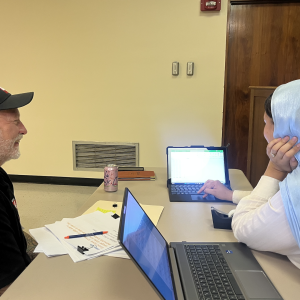
In November 2023, the City of Detroit enacted an Energy and Water Benchmarking Ordinance requiring buildings 25,000 square feet and larger to annually report their energy and water usage to the city. The policy focuses on transparency, giving building owners and city leaders insight into how buildings perform and where opportunities may exist to improve efficiency and reduce costs. SBN Detroit interviewed Maria Galarza, Deputy Director of the...
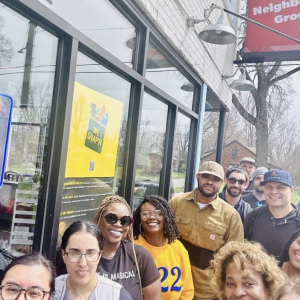
Detroit-based nonprofit Elevate focuses on the intersection of energy equity, housing stability, and workforce development. Through community partnerships and programs that connect residents with energy-efficiency upgrades, education, and job-training opportunities, the organization works to strengthen neighborhoods while helping families reduce costs and improve living conditions. SBN Detroit interviewed Shawna Forbes Henry, Director of Community Programs at Elevate, about the broader implications of energy access, the structural barriers communities...
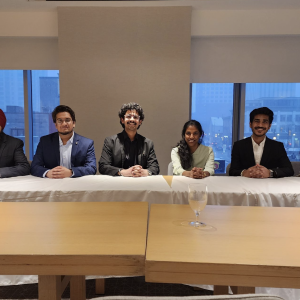
The Green Business Lab, founded in 2002 by Samantha Svoboda, aims to help organizations strengthen decision-making about sustainability through immersive business simulations and strategic advisory services. Working with leadership teams across industries, the Lab creates structured environments where executives can explore how environmental, operational, and market forces intersect with core business strategy. Over more than two decades, the Green Business Lab has worked with companies toward moving sustainability...