

Butzel is one of Michigan’s longest-standing law firms, advising businesses across industries on regulatory compliance, environmental law, and complex commercial matters. As environmental expectations evolve alongside shifting regulatory realities, the firm plays a key role in helping companies navigate both legacy challenges and emerging risks.
SBN Detroit interviewed Butzel shareholder Beth Gotthelf to discuss how environmental compliance, sustainability, and innovation are intersecting today — particularly in Southeast Michigan — and what businesses should be paying attention to in the years ahead.

Q: From your perspective, what are the most consequential changes shaping how companies approach compliance and sustainability today?
A: Many companies still treat compliance and sustainability as separate conversations. Compliance is something they aim for while sustainability is framed as an aspirational goal.
Where those two intersect most often is when sustainability also makes business sense. Reducing water use, reusing materials, and improving efficiency often lower costs. Recycling and waste reduction can improve margins. As a result, many organizations are approaching sustainability less as a branding exercise and more as a fiscal and operational strategy.
Q: How are businesses navigating the tension between accelerating sustainability goals and increasingly complex regulatory frameworks at the state and federal levels?
A: Right now, I don’t see the same level of tension that existed a year or two ago, particularly in Michigan, unless they also have facilities outside of the U.S. or in California. Many companies still believe in climate action and sustainability, but they’re not always using that language domestically given the current federal environment.
That said, sustainability reporting is mandated outside the US, with the European Union leading the way for larger firms, and nations like Australia, China, India, and Japan requiring disclosures. Those requirements still apply across all divisions, including U.S. facilities.
One area where regulatory complexity is very real is battery recycling, particularly lithium batteries. The regulatory framework in the U.S. makes recycling more difficult than in other countries. That’s an area where we need better alignment to compete in the global market. There is progress happening, but it remains a challenge.
Q: Southeast Michigan has a deep industrial legacy alongside growing environmental expectations. What challenges does that history create for remediation and compliance in this region?
A: There are many. One challenge, for example, is that materials historically considered “clean fill” may no longer be viewed that way under current standards. The question becomes: do we excavate and remove it all? That creates dust for the area, truck traffic, emissions, road wear, and additional environmental impacts. In some cases, the net environmental benefit is questionable.
We also face decisions around highly contaminated sites — whether to cap and manage contamination in place or attempt full remediation to pre-industrial conditions, which can be extremely costly and disruptive. I have simplified the issue but there is a balance between the desire to re-use contaminated sites (brownfield), finding a new productive use, and moving to a ‘greenfield,’ where you do not have to incur the cost, time, and worry of a brownfield.
On the compliance side, Southeast Michigan has dense industrial areas adjacent to residential neighborhoods, particularly in places like Southwest Detroit. That proximity creates ongoing tension between maintaining industrial activity and protecting air quality and public health. These are not simple issues, and they require balance rather than absolutes.
Q: Are you seeing a shift from reactive environmental compliance to more proactive strategies?
A: Yes, overall companies are more proactive than they were decades ago. There’s greater environmental stewardship and awareness. There are better tools to allow for reuse, recycling, lower emissions, fewer chemicals being discharged in wastewater, better management of stormwater, etc. Companies are constantly looking and then implementing those tools. People, whether a resident, employee, or both–want products that last, clean water for swimming and boating, and healthy ecosystems — and they also want manufacturing and economic growth. Balancing those priorities is ongoing but can be done. We can build manufacturing and provide jobs while protecting the environment.
Larger companies tend to have more resources to implement sustainability strategies and work with suppliers to raise standards. That said, the last year has been different. Incentives to pursue sustainability have diminished, and in some cases, companies feel penalized for investing in these efforts. That has slowed momentum for some organizations.
Q: What role does innovation play in helping companies meet environmental obligations without stalling growth?
A: Innovation is essential. It shows up in many forms — energy management software, automation, detection systems, improved chemicals, safer materials, and better protective equipment to name a few.
There’s also a real opportunity to expand access to innovation, especially for small and midsize companies. More forums, education, and exposure to tools like energy tracking, water reuse, stormwater management, and greywater systems would help accelerate adoption. Innovation should be encouraged, not siloed.
Q: How are climate-related risks influencing environmental decision-making in the Great Lakes region?
A: Water quality has become a major concern. The Flint water crisis highlighted how municipal systems directly affect not just residential, but industrial operations. Poor water quality can damage equipment and disrupt production, forcing companies to install additional filtration and safeguards.
Flooding is another growing issue. We’re seeing more frequent and severe rain events, impacting facilities across urban and rural areas alike. It is not good when a facility is flooded, potentially allowing chemicals to flow into the environment or causing work to stop. There are a variety of causes of flooding, some related to the drainage system on property, and some off property. Managing flood risk increasingly requires coordination between municipalities and private operators.
Extreme weather — snow, wind, heat, flooding — is becoming part of long-term planning. Some larger companies are building redundancy across regions, but many Michigan businesses are smaller and must do the best they can within limited resources.
Q: Compared to other regions, what opportunities does Southeast Michigan offer for sustainable redevelopment and clean manufacturing?
A: Southeast Michigan has an abundance of industrial sites suitable for adaptive reuse, along with a strong workforce of engineers, skilled trades, and vocational talent. Our educational infrastructure supports innovation and retraining, which is critical for clean manufacturing.
Customers are also driving this shift. Companies increasingly prefer to work with clean manufacturers and sustainable suppliers. That demand creates opportunity.
One promising area is anaerobic biodigesters. More than 60 percent of food waste currently goes to landfills, but biodigesters can convert that waste into renewable natural gas, fertilizer, and other useful byproducts. Similar opportunities exist in solar and wind, where technology continues to improve efficiency and output.
Q: Looking ahead, what environmental issues should Michigan businesses be watching over the next five to ten years?
A: It depends heavily on the industry. Healthcare organizations face challenges related to water use, chemical discharge, and infection control. Surface finishers are looking for lighter, stronger, and environmentally safer alternatives to certain metals, like chrome, that are also acceptable to the customer, whether it be an automobile manufacturer or the Army. Manufacturers in battery production or reuse, for example, must address metal recovery and regulatory complexity.
Battery recycling is imperative, but it requires government support and clearer pathways. Right now, other countries are further ahead, and without stronger regulatory alignment and incentives, U.S. companies risk falling behind and playing catch-up.
Be sure to subscribe to our newsletter for regular updates on sustainable business practices in and around Detroit.



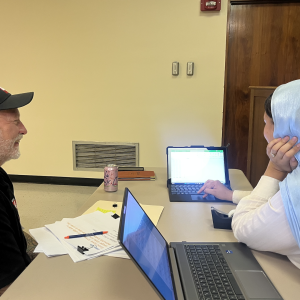
In November 2023, the City of Detroit enacted an Energy and Water Benchmarking Ordinance requiring buildings 25,000 square feet and larger to annually report their energy and water usage to the city. The policy focuses on transparency, giving building owners and city leaders insight into how buildings perform and where opportunities may exist to improve efficiency and reduce costs. SBN Detroit interviewed Maria Galarza, Deputy Director of the...
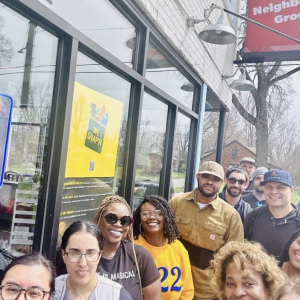
Detroit-based nonprofit Elevate focuses on the intersection of energy equity, housing stability, and workforce development. Through community partnerships and programs that connect residents with energy-efficiency upgrades, education, and job-training opportunities, the organization works to strengthen neighborhoods while helping families reduce costs and improve living conditions. SBN Detroit interviewed Shawna Forbes Henry, Director of Community Programs at Elevate, about the broader implications of energy access, the structural barriers communities...
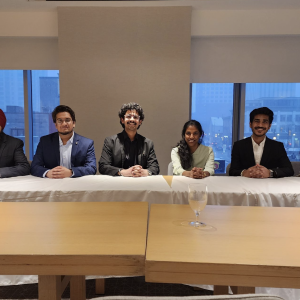
The Green Business Lab, founded in 2002 by Samantha Svoboda, aims to help organizations strengthen decision-making about sustainability through immersive business simulations and strategic advisory services. Working with leadership teams across industries, the Lab creates structured environments where executives can explore how environmental, operational, and market forces intersect with core business strategy. Over more than two decades, the Green Business Lab has worked with companies toward moving sustainability...