

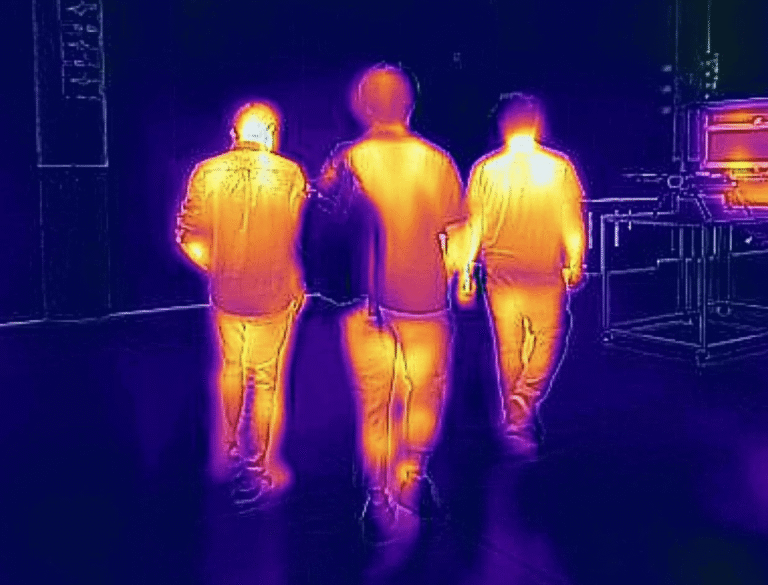
ThermoVerse is a Detroit-based urban innovation startup founded by engineer and researcher Shantonio Birch. The company’s work centers on advanced thermal energy storage and people-focused building technologies that reduce waste, stabilize indoor environments, and free up electrical capacity.
SBN Detroit interviewed Birch about the future of grid resiliency, energy equity, and why Southeast Michigan is positioned to lead in next-generation smart city innovation.

Q: What is the impetus behind the work you do?
A: ThermoVerse is focused on one of the biggest stability issues we face: how do we allow high-energy users like data centers to coexist in communities without competing for the same energy we need to heat homes and businesses?
Our goal is to reduce the largest source of energy consumption in buildings — the HVAC system — so more energy is available at the panel. We want to empower building owners to turn their buildings into value-added assets instead of liabilities.
Q: What are the biggest challenges buildings face?
A: It all comes down to energy. There are many issues in the built environment, and I think of buildings like the human body — everything is connected. We talk about indoor air quality and comfort, but when you look at economic development, the thing that will get this nation moving is our relationship to energy.
Right now, poor power quality is being distributed through the grid and into homes, affecting how our devices and systems function. When you layer on additional demand from advanced manufacturing, EVs, and AI data centers, we’re going to experience more brownouts and blackouts. That’s the biggest challenge buildings are facing: how do we allow this huge economic wave — fueled by AI — without compromising communities?
Q: What technologies or approaches will have the greatest impact on reducing energy waste in buildings?
A: Anything simple. The biggest barrier for new technology is integration, so solutions have to be straightforward.
I believe thermal energy storage is a major opportunity. It will play a huge role in meeting grid-resiliency needs. Renewables like solar are valuable, but they don’t solve the smart-growth challenge we face. We need growth that strengthens the grid rather than stressing it.
Q: How does better thermal management translate into healthier or safer living conditions?
A: I found my way into this field because I experienced heat stress in my own townhouse apartment during the pandemic while studying at U-M. I was close to heat stroke. We’re seeing more and more cases of heat stress in hospitals and communities now. Better thermal management helps reduce those risks.
Beyond the health impact, there’s the economic side. Many people are spending a significant portion of their income on utilities. Improved thermal performance means lower bills, better living conditions, and more resilience as heat waves become more frequent.
Q: What role can innovation play in addressing energy inequity — especially in aging housing stock and low-income communities?
A: I’ll say this boldly: most existing building technologies were not designed with equity or people in mind. They were built around the question, “How do we cool this space so we can have people here?” At ThermoVerse, we flip that script. We build around the people first.
People-centric technologies will play a huge role in reducing energy demand and supporting smart growth so AI and other advancements can coexist with communities instead of overwhelming them.
Q: What makes Southeast Michigan a meaningful place to build and test smart-city and energy-efficiency technologies?
A: If you look at major cities like Chicago or New York, Detroit stands out. We have the greatest potential for smart-city innovation because our built environment is underdeveloped in certain areas, making the starting point ideal.
We can embed smart infrastructure into buildings more easily to enable fluid energy transfer between the grid and the built environment. There’s also a level of openness and willingness here that you don’t always find in cities that are already fully built out.
Q: What barriers still slow down the adoption of innovative building technologies, even when they’re proven to reduce waste?
A: Integration. That is the barrier for most proven technologies.
We also have split incentives in the built environment. Building owners are our customers, but their customers — the tenants — want a better user experience. Then you have utilities, with power-purchase agreements and rate structures that complicate adding new technologies.
And finally, the contractors. They’re the ones installing the equipment. If they don’t understand how a new technology fits into existing systems, it won’t be integrated. Heat pumps are a good example — contractor knowledge gaps can slow down adoption, even when the technology is solid.
Q: For building owners looking to modernize, where should they focus first to get the biggest energy impact?
A: If you’re going to modernize, you have to measure. Establish a baseline. Invest in sensors and meters to understand your energy use down to the unit. You can’t manage what you don’t measure.
Once you have visibility, you can start thinking about the ecosystem of technologies that will create the biggest short-term and long-term impact. Ultimately, we need buildings — and neighborhoods — where energy flows bi-directionally between the grid and the built environment.
Q: Looking ahead, what do you believe will define the next chapter of energy innovation in Detroit and more broadly?
A: Detroit has a deep understanding of how communities and businesses coexist. The next evolution of the built environment here will be people-based — designed around the experience of living and working well.
Nationally, we’re at a very interesting moment in energy. For years, the “energy transition” has been politicized, and we’re now looking at it through an economic lens driven by AI. The biggest opportunity ahead is doubling our energy production to meet the demands of AI data centers.
The White House recently launched the Genesis Mission — the largest investment in strengthening our national energy reserve to prepare for the new digital era. There’s an enormous opportunity for young people to enter this field and innovate.
With more chips and devices requiring higher power density, advanced thermal solutions are here to stay. We want more people participating and building the next generation of thermal-management technologies.
Be sure to subscribe to our newsletter for regular updates on sustainable business practices in and around Detroit.



In November 2023, the City of Detroit enacted an Energy and Water Benchmarking Ordinance requiring buildings 25,000 square feet and larger to annually report their energy and water usage to the city. The policy focuses on transparency, giving building owners and city leaders insight into how buildings perform and where opportunities may exist to improve efficiency and reduce costs. SBN Detroit interviewed Maria Galarza, Deputy Director of the...
Detroit-based nonprofit Elevate focuses on the intersection of energy equity, housing stability, and workforce development. Through community partnerships and programs that connect residents with energy-efficiency upgrades, education, and job-training opportunities, the organization works to strengthen neighborhoods while helping families reduce costs and improve living conditions. SBN Detroit interviewed Shawna Forbes Henry, Director of Community Programs at Elevate, about the broader implications of energy access, the structural barriers communities...

The Green Business Lab, founded in 2002 by Samantha Svoboda, aims to help organizations strengthen decision-making about sustainability through immersive business simulations and strategic advisory services. Working with leadership teams across industries, the Lab creates structured environments where executives can explore how environmental, operational, and market forces intersect with core business strategy. Over more than two decades, the Green Business Lab has worked with companies toward moving sustainability...