WAFA DINARO, EXECUTIVE DIRECTOR, OF THE NEW ECONOMY INITIATIVE, AND A LEADERSHIP COMMITTEE MEMBER FOR SUSTAINABLE BUSINESS NETWORK DETROIT
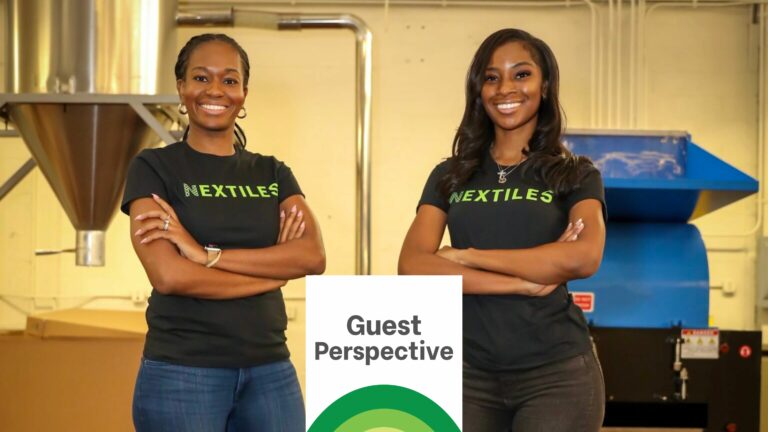
During an internship with a recycler in New York in 2020, entrepreneur and environmental scientist Madeline Miller watched as the waste materials from textile companies were being processed in the facility, and something entrepreneurial clicked.
In the “waste,” she saw home-building insulation that could be reused back home in Michigan while increasing energy efficiency in Detroit homes.
From there, NexTiles was born, a Detroit-based textile recycling company that produces EcoBlow – a nontoxic, eco-friendly building insulation made entirely of recycled pre-consumer fabric from manufacturers, particularly automotive interior suppliers, and fashion designers.
While her experience reflects the role small businesses can play directly in terms of creating eco-conscious products, every small business, no matter their product or service, can implement eco-friendly business practices.
Unfortunately, many of the same challenges that prevent small businesses from thriving in general – limited access to capital and lending; a lack of technical assistance in finances, marketing, and business planning; and the inability to tap into a business support network for grants and resources – will prevent them from reaching their full potential in sustainability.
Yet, nearly all the factors that help small businesses drive economic resilience position them to be a transformative force in sustainability.
SMALL BUSINESS DRIVES SUSTAINABLE ECONOMIC RESILIENCE
First, there are the sheer numbers. There are 33.2 million small businesses in the U.S. accounting for 99.9% of all businesses. They make up our largest employer group and accounted for almost two-thirds – or 17.3 million – of all jobs created from 1995 to 2021, according to the Small Business Administration. And they continue to grow, in 2022, there were more than 5.1 million new business applications filed.
Second, small businesses are nimble and can move quickly to drive innovation. They are fueled by their founders’ ideas and life experiences and are often created to provide solutions to real-world problems impacting friends, families, or communities.
Third, small businesses are invested in the social fabric of their communities and exist all around us, giving them nearly universal reach. They have a vested interest in their neighborhoods thriving that stretches well beyond business and adds further incentive for them to succeed.
At the New Economy Initiative, we’ve spent the past two decades building a support ecosystem that helps entrepreneurs, startups, and small businesses build a more resilient economy within their own communities and Southeast Michigan.
In the case of NexTiles, we provide funding to the Centrepolis Accelerator at Lawrence Tech University, which has played an integral role in NexTiles’ product development and growth. It is why we support similar nonprofit and locally grounded organizations that provide technical assistance, lending, and connections to small businesses throughout Southeast Michigan.
Sustainability is the next logical step in expanding our mission.
That is why the New Economy Initiative is pursuing a sustainability program to integrate with our traditional business support activities.
NEI SUSTAINABILITY PROGRAM GOALS
That program can accomplish a few major goals that will help small business play its role in sustainability by mirroring much of what we already do.
- It would include raising awareness about the bottom-line business benefits of sustainability that can be achieved through energy efficiency.
- It can help businesses identify how to integrate sustainable practices into their business plans that reduce waste while increasing efficiency and profits.
- It can help them access resources and grants available to increase sustainability.
Chief sustainability officer is one more a hat small business owners are asked to wear – we need to provide a small business ecosystem that empowers them to fulfill it.
Until we do, the collective power of our largest employer group to create a world that lasts for future generations is largely going untapped.
Source for data: https://www.uschamber.com/small-business/state-of-small-business-now
Be sure to subscribe to our newsletter for regular updates on sustainable business practices in and around Detroit.