


In November 2023, the City of Detroit enacted an Energy and Water Benchmarking Ordinance requiring buildings 25,000 square feet and larger to annually report their energy and water usage to the city. The policy focuses on transparency, giving building owners and city leaders insight into how buildings perform and where opportunities may exist to improve efficiency and reduce costs.
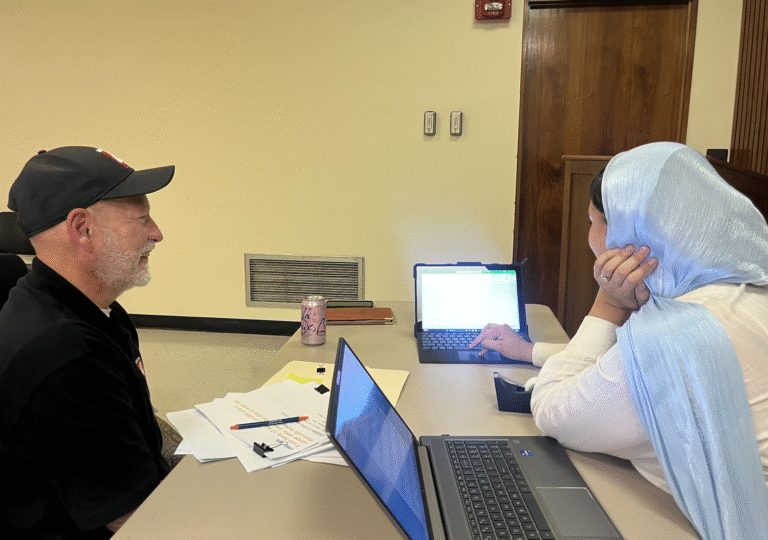
SBN Detroit interviewed Maria Galarza, Deputy Director of the City of Detroit’s Office of Sustainability, and Zahra Seblini, Senior Energy Analyst, about how the ordinance works, what early data is revealing about Detroit’s building stock, and why benchmarking can be an important first step toward improving building performance.

Q: For readers who may not be familiar, what is Detroit’s benchmarking ordinance in simple terms, and why was the city ready to implement it now?
Galarza: At its core, the ordinance simply requires certain buildings to report how much energy and water they use each year. Building owners submit 12 months of consumption data annually through a standardized reporting system.
It’s important to note that the ordinance does not set limits on how much energy a building can use. It’s strictly about reporting and understanding consumption patterns.
The policy grew out of several years of community engagement and research led by the Green Task Force – Energy Waste Reduction Committee. Members studied benchmarking programs in other cities across the country and worked with Council Member Scott Benson to introduce the ordinance. Once it was approved by the City Council, the Office of Sustainability was tasked with administering the program.
Q: Beyond compliance, what is the larger goal behind requiring buildings to report their energy and water usage?
Galarza: The broader goal is to better understand how buildings contribute to energy consumption and greenhouse gas emissions.
Across the state, region, and city, there are ongoing efforts to reduce emissions as part of climate planning strategies. Buildings represent one of the largest opportunities to make progress because they account for a significant share of energy use.
Detroit, as the largest city in Michigan, has a large concentration of commercial, institutional, and multifamily buildings. By focusing on these properties, we can begin identifying where efficiency improvements could have the greatest impact.
Q: Many building owners may initially view reporting as another administrative requirement. How is the city helping them see the financial and operational value behind benchmarking?
Galarza: Energy costs continue to rise, and benchmarking can help building owners better understand where those costs are coming from.
When owners begin analyzing their energy data – looking at kilowatt hours used over time, how consumption changes with temperature, and where spikes occur – it can reveal patterns they may not have noticed before.
That information can be extremely valuable when making the case for capital improvements. If a building is operating inefficiently, benchmarking data helps demonstrate the potential financial benefits of upgrades or renovations. In that sense, benchmarking becomes the foundation for identifying opportunities to reduce operating costs over the long term.
Q: What kinds of insights can building owners gain by comparing their data to similar properties?
Galarza: One of the most valuable aspects of benchmarking is the ability to compare buildings that serve similar functions.
A fire station should be compared with other fire stations. An office building should be compared with other office buildings. That type of comparison helps owners understand whether their building is performing efficiently relative to similar properties.
The reporting platform used for benchmarking, EPA’s ENERGY STAR Portfolio Manager, also provides a national efficiency score. That score allows building owners to see how their building performs compared with similar buildings across the country.
For many owners, that benchmark becomes a clear goalpost. If the score is lower than expected, it can prompt a closer look at building systems and potential upgrades.

Q: Have any early trends emerged from the first round of data that either confirmed expectations or revealed new insights?
Seblini: We are still analyzing the early data, but a few patterns have started to emerge.
One example involves houses of worship. Detroit has nearly 2,000 houses of worship, and those that fall under the ordinance have shown energy use levels that are often significantly higher than the national median.
In many cases, this appears to be tied to deferred maintenance. Houses of worship often operate large buildings but have limited revenue streams to support major infrastructure upgrades.
We’re also seeing the impact of Detroit’s aging building stock. Many buildings were constructed before the 1970s, particularly during construction booms in the 1920s, 1930s, 1950s, and 1960s. While these buildings have strong architectural character, the mechanical systems inside them can be inefficient if they have not been modernized.
Q; Other cities have implemented benchmarking policies before Detroit. What lessons has the city drawn from those examples?
Seblini: We looked closely at other municipalities that already have benchmarking ordinances in place.
Ann Arbor has been particularly helpful because it’s a regional example that implemented benchmarking a few years before Detroit. Chicago has also provided insights into outreach strategies and program administration.
One key lesson is that education and communication are essential. We’ve used a combination of outreach methods, from direct mail reminders to webinars and technical assistance sessions, to help building owners understand the process.
We’ve also hosted in-person events we call “data jams.” These sessions allow building owners to receive technical support while also connecting with others who are navigating the same reporting process.
Partnerships have been important as well. Organizations like the Detroit 2030 District and the Midwest Energy Efficiency Alliance bring valuable expertise and help expand the support network available to building owners.
Q: As Detroit continues to see both new development and reinvestment in older buildings, how does this ordinance position the city for the future?
Seblini: Energy efficiency is one of the most immediate and practical ways to address rising energy costs.
Detroit is experiencing growth in new development, but we also have a large number of older buildings that will require ongoing investment. Benchmarking provides data that can inform how those investments are prioritized.
By understanding how buildings perform today, owners can make more informed decisions about upgrades and improvements that will help buildings operate more efficiently in the future.
Q: If building owners take away one message from the benchmarking initiative, what would you want it to be?
Seblini: First, complying with the ordinance is completely free Our office provides a benchmarking guide, technical support, and one-on-one assistance to help owners navigate the process. There are paid services, There are paid services available that might be of value by large portfolio holders.
As far as free resources, our We recommend that building owners start by checking out the website: www.detroitmi.gov/benchmarking first – we want building owners to see us as a partner in this work.
More importantly, benchmarking can open the door to additional opportunities. The data collected through benchmarking is often the first step toward qualifying for grants, rebates, and financing programs that support energy efficiency improvements.
In that sense, benchmarking is not just about reporting data. It’s about helping building owners understand how their buildings perform and positioning those properties for long-term value and competitiveness.
Be sure to subscribe to our newsletter for regular updates on sustainable business practices in and around Detroit.







In November 2023, the City of Detroit enacted an Energy and Water Benchmarking Ordinance requiring buildings 25,000 square feet and larger to annually report their energy and water usage to the city. The policy focuses on transparency, giving building owners and city leaders insight into how buildings perform and where opportunities may exist to improve efficiency and reduce costs. SBN Detroit interviewed Maria Galarza, Deputy Director of the...

Detroit-based nonprofit Elevate focuses on the intersection of energy equity, housing stability, and workforce development. Through community partnerships and programs that connect residents with energy-efficiency upgrades, education, and job-training opportunities, the organization works to strengthen neighborhoods while helping families reduce costs and improve living conditions. SBN Detroit interviewed Shawna Forbes Henry, Director of Community Programs at Elevate, about the broader implications of energy access, the structural barriers communities...

The Green Business Lab, founded in 2002 by Samantha Svoboda, aims to help organizations strengthen decision-making about sustainability through immersive business simulations and strategic advisory services. Working with leadership teams across industries, the Lab creates structured environments where executives can explore how environmental, operational, and market forces intersect with core business strategy. Over more than two decades, the Green Business Lab has worked with companies toward moving sustainability...