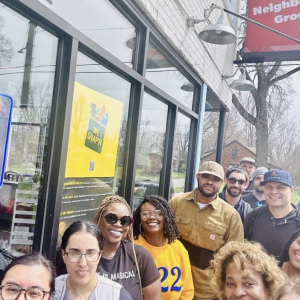
Joel Howrani Heeres, Detroit’s former, first, sustainability director, shared his thoughts about tangible initiatives businesses can integrate to work toward a cleaner environment.
In his role, Howrani Heeres provides strategic leadership, tactical guidance, and technical skills to drive triple bottom line (environment, equity, & economics) strategy and actions to help Detroiters improve their lives by creating a healthier, greener, more vibrant city for all.
Under Howrani Heere’s leadership, the Office of Sustainability had over 6,800 interactions with Detroiters and fostered partnerships with neighborhoods, businesses, and philanthropic and non-governmental organizations working to make Detroit more equitable, economically thriving, and environmentally healthy.
Before taking this position, Howrani Heeres led sustainability and climate action planning at EcoWorks and served as managing director of the Southeast Michigan Regional Energy Office for DTE Energy.
We asked him to share some steps that businesses can take to reduce energy and water usage as well as ensure residents are not experiencing impacts from climate and climate change.
Track energy and water usage
You manage what you measure, so start measuring. Data shows that once you begin tracking usage you’ll begin saving 3% in energy costs.
A good opportunity for businesses to begin measuring and reducing energy waste is to join the Detroit Energy Challenge. This was launched in collaboration with the Detroit 2030 District and Michigan Battle of the Buildings, and it’s a free and friendly competition.
Conduct an energy audit
Doing a walk-through with an expert to point out things that can be done to save energy is invaluable. Within the city, we’ve conducted these audits now on 155 buildings and identified conservation measures that we are implementing. There are several audit programs available, such as DTE’s Business Energy Consultation.
Update lighting
A low-hanging fruit initiative is to update to LED. The cost to do so is coming down, and the cost of electricity is rising, so this is a win/win.
Integrate renewables
Integrating renewable or solar energy is a great action to take, especially if the electrical load is high. Companies can get a 26% tax credit for investing in solar.
Check out the Detroit Solar Toolkit to identify your building’s solar potential.
Join the global Race to Zero campaign
Race To Zero participants are committed to achieving net-zero carbon emissions by 2050 at the latest. The city of Detroit has joined the campaign.
Race to Zero’s intent is to rally leadership and support from businesses, cities, regions, and investors for a healthy, resilient, zero-carbon recovery that prevents future threats, creates decent jobs, and unlocks inclusive, sustainable growth.
Electrification
To get to net zero we must also think about electrification. We know we can clean the grid and introduce renewables, but we cannot clean natural gas.
When you consider the cost of maintenance, gas, and parts on a gas-run vehicle, the total cost of electric vehicle ownership makes sense economically as well as environmentally.
DTE offers a Charging Forward rebate program, so it pays to be an early adopter.
Make investments in climate resilience
We all remember last year’s flood event, and climate projections tell us that we’ll continue to see more and more extreme storms. Installing things such as backflow preventers, sump pumps, and generators are great considerations.
Engage with neighbors
Being a good corporate citizen and good neighbor reaps great benefits. I think businesses should talk to their communities and ask what things would make the neighborhood better. Also, look around at the land you own. Plant trees. Invest in biodiversity.
Interested in getting assistance in setting up a sustainability program?
Howrani Heeres points to DTE as a resource and also B Corp certification, a designation that a business is meeting high standards of social and environmental performance.