

Founded in 1965, Gensler is a global architecture and design firm working across sectors including urban development, commercial real estate, and civic infrastructure. SBN Detroit sat down with Najahyia Chinchilla, senior associate and sustainability consultant, to discuss mass timber, embodied carbon, and what sustainable construction means for Southeast Michigan.

Q: Why is wood re-emerging right now as a serious option for large-scale, urban construction?
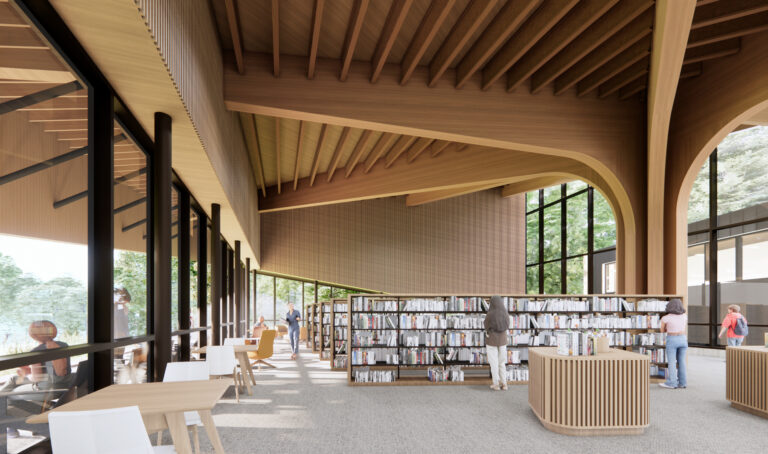
A: Mass timber blends strength, sustainability, and design quality in ways few materials can. Wood has been used for centuries, but today’s engineered timber products – CLT, glulam, DLT, and NLT – bring a new level of precision, consistency, and performance that aligns with modern building requirements, including strict quality control and predictable fire resistance.
Another driver is the industry’s increasing focus on reducing embodied carbon. Compared to steel and concrete structural systems, mass timber can significantly lower a project’s carbon footprint. At the same time, sustainably managed forests contribute to carbon sequestration and biodiversity, while modern processing methods reduce waste. Wood’s lighter weight also cuts fuel use and emissions during transportation, particularly when sourced regionally.
From a delivery standpoint, mass timber offers compelling schedule advantages. Prefabricated components, lighter assemblies, and the ability to sequence work in parallel can meaningfully shorten construction timelines, an increasingly important factor for clients who need projects delivered quickly and efficiently.
Q: Detroit and the Midwest have long been defined by steel, concrete, and manufacturing. How does mass timber challenge or complement that legacy?
A: Mass timber is highly complementary. Michigan was once the nation’s top lumber producer, giving the region a timber legacy that predates its steel and concrete era. At Gensler, we’re designing hybrid systems, such as Fifth + Tillery in Austin, that combine timber and steel to modernize existing structures.
For each project, we partner with clients, engineers, and contractors to select the right system based on performance, sustainability goals, schedule, and budget. As mass timber gains momentum for its lower embodied carbon, it is also prompting steel and concrete industries to innovate and compete.
Q: How do projects like the tall timber work featured at the MSU Tall Timber exhibit help shift conversations about what sustainable urban buildings can look like?
The MSU Tall Timber exhibit, at Chrysler House (open until March, 2026), is a great way to broaden the conversation across the design and construction industries, real-estate community, property owners and the public on what is possible. The exhibit includes Gensler’s Proto-Model X project for Sidewalk Labs and mass timber projects from across the state. The curation team is also doing a great job of hosting events and panels that give project teams a chance to talk about projects and lessons learned.
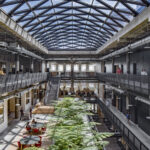
In legacy industrial cities, where we have a strong existing building inventory, we have a responsibility to preserve and repurpose our buildings. Nothing is more sustainable than reutilizing buildings and reducing waste, as seen with the Book Depository building in Corktown.
For new buildings, we also have a responsibility to build for the future and make the best choices that we can with the materials at our disposal. Mass Timber is a responsible option and should always be considered.
Q: Beyond sustainability, what design or human-scale qualities does mass timber introduce that more conventional materials often don’t?
A: Wood brings a natural warmth and biophilic quality that supports wellbeing – lowering stress, improving cognitive function, and creating spaces that feel welcoming and calm. Exposing the structure adds authenticity and makes the architecture legible, helping people feel more grounded in the space.
Q: What makes Michigan uniquely positioned to lead in mass timber and low-carbon construction?
At the MSU Michigan Mass Timber Update in December, I was able to see the strength of the Michigan mass timber community coming together. The institutional leadership from Michigan State University and their director, Sandra Lupien, is positioning Michigan’s mass timber capabilities on a global level.
Connections are being established across the market from – architects, structural engineers, MI EGLE, code officials, business and economic development associations, workforce training leaders to contractors and suppliers.
Q: How could mass timber and life cycle thinking influence redevelopment in cities like Detroit, where adaptive reuse and reinvestment are central to the urban story?
A: Detroit has led in adaptive reuse for over 25 years, proving that reinvesting in existing buildings delivers cultural, social, economic, and environmental value. Mass timber and lifecycle thinking are the next steps, offering lower carbon pathways as the city continues to grow.
To make informed decisions, architects and clients need a full understanding of a material’s life cycle, from extraction and manufacturing to reuse and end of life. This is why circular economy thinking is so critical to future development. At Gensler, our Gensler Product Sustainability (GPS) Standards help guide this process by providing clear, industry-aligned criteria that accelerate the adoption of lower carbon materials in collaboration with the Common Materials Framework.
Q: In a region shaped by reinvention, how do you see sustainable materials and measurement tools contributing to the next chapter of Detroit’s built environment?
A: Detroit and Michigan have always thrived on reinvention. That same spirit of creativity positions the region to lead in the next wave of sustainable development. Our climate challenges, paired with the natural and industrial resources already here, create an ideal environment for adopting materials and strategies that will help Michigan thrive through future change.
The growing investment in next-generation technologies is especially exciting. As industries across the state push toward innovation, there’s real potential for that momentum to drive broader adoption of low carbon materials, mass timber, and performance-based design tools. If we want to attract new residents, businesses, and industries, we need to shape buildings and public spaces that reflect where Detroit is going – healthy, efficient, resilient, and future focused.
Q: As sustainability expectations continue to rise, what do you think will separate projects that genuinely reduce impact from those that simply meet minimum standards?
Minimum standards are steadily improving as energy codes tighten and reduce allowable energy use, which means operational carbon is no longer the primary differentiator. What will set truly impactful projects apart is a commitment to addressing embodied carbon as well. Conducting Life Cycle Assessments (LCAs) early in design gives clients and teams a clear baseline and empowers them to make more informed material choices.
Projects that are serious about reducing their overall footprint will also look beyond efficiency to incorporate clean energy—whether by purchasing renewables from their utility or integrating onsite solutions. Michigan is particularly well-suited for ground source heat pumps, with stable underground temperatures that perform reliably through freezing winters and hot summers, and a strong network of engineers and installers who understand the technology.
In short, the leaders will be the teams that measure comprehensively, design holistically, and pair low carbon materials with renewable energy strategies to achieve meaningful, long-term impact.
Q: Five to ten years from now, how do you hope conversations around materials, carbon, and design will have evolved?
A: In the next decade, I hope we shift from simply minimizing harm to actively restoring the planet. We know recovery is possible: ecosystems rebound when protected, and contaminated sites can be cleaned. I’m honored to serve on an Advisory Committee with Friends of the Rouge, who are using science-based analysis to prioritize conservation of critical habitats within the watershed and guide responsible development.
I want to see buildings and materials that absorb carbon and help regenerate ecosystems. Some clients are already embracing this, providing dense and large-scale native plantings in urban environments to provide habitat for birds and pollinators, and through careful site selection.
Across industries, embracing circular economy strategies will allow materials to be reused, diverting them from the waste stream. This takes a lot of planning and coordination which we can simplify with AI tools to track material inventory.
And importantly, our work must advance equity so that no community bears disproportionate environmental burdens.
Ultimately, our buildings should make people – and the planet – healthier. All of this is within reach, and now is the time to do it.
Be sure to subscribe to our newsletter for regular updates on sustainable business practices in and around Detroit.



In November 2023, the City of Detroit enacted an Energy and Water Benchmarking Ordinance requiring buildings 25,000 square feet and larger to annually report their energy and water usage to the city. The policy focuses on transparency, giving building owners and city leaders insight into how buildings perform and where opportunities may exist to improve efficiency and reduce costs. SBN Detroit interviewed Maria Galarza, Deputy Director of the...
Detroit-based nonprofit Elevate focuses on the intersection of energy equity, housing stability, and workforce development. Through community partnerships and programs that connect residents with energy-efficiency upgrades, education, and job-training opportunities, the organization works to strengthen neighborhoods while helping families reduce costs and improve living conditions. SBN Detroit interviewed Shawna Forbes Henry, Director of Community Programs at Elevate, about the broader implications of energy access, the structural barriers communities...
The Green Business Lab, founded in 2002 by Samantha Svoboda, aims to help organizations strengthen decision-making about sustainability through immersive business simulations and strategic advisory services. Working with leadership teams across industries, the Lab creates structured environments where executives can explore how environmental, operational, and market forces intersect with core business strategy. Over more than two decades, the Green Business Lab has worked with companies toward moving sustainability...