Bosch is a Germany-based global supplier of technology and services that employs 421,000 employees worldwide in over 60 companies. It has technical centers in Farmington Hills and Plymouth.
We spoke to Tracy Rosol, carbon neutrality coordinator for the U.S. and Canada, about how the company approaches and manages sustainability.
Q: How does Bosch approach carbon neutrality?
A: In 2019, our leadership announced that Bosch would become 100% carbon neutral.
We established committees in a multitude of countries and put key people in place to procure new green energy and carbon credits to offset emissions. We created a database where locations worldwide submit information like how much energy, water, and gas each is using.
Q: What is your role in this?
A: Germany is our hub and all initiatives roll out from there and cascade down. My main role at Bosch is operations support analyst – and I am also the carbon neutrality coordinator for the US and Canada. We have a carbon neutrality coordinator in every country.
Q: What are your goals in this role?
A: We had requirements to be 100% carbon neutral, and we reached that goal in 2020. It was not an option to fail. The entire company – over 400 locations worldwide – has reached this goal.
Q: Tell us about some of the internal initiatives Bosch has implemented to protect the environment.
A: Bosch works to invent things to make life better.
We are working on different fuel systems, working on recycling programs, and composting programs. Within the facilities, there are many initiatives to ensure we are landfill-free. We work with local amenities for plastic pickup. Our cafeterias use compostable items and composting bins. What trash we do have is incinerated.
We are working on technologies to reduce energy usage in our plants and also in homes.
All of our lighting has now been changed to LED and we use motion detectors.
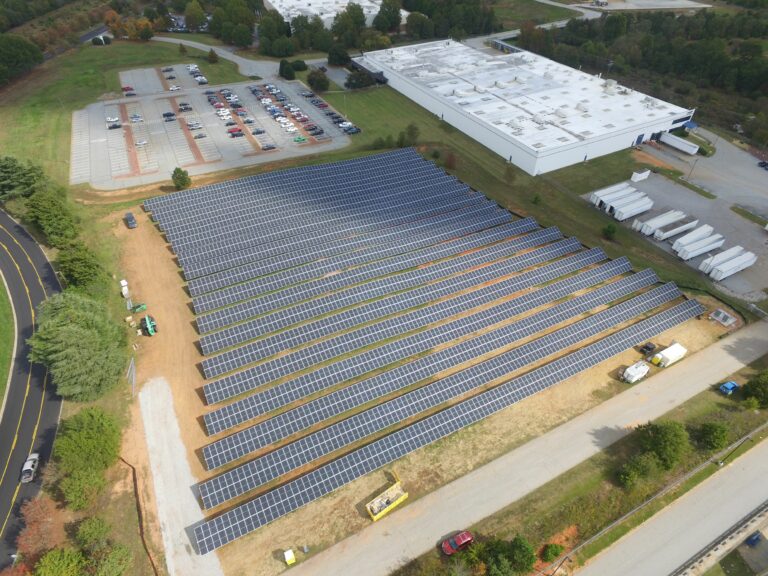
We are working to install solar on sites.
Bosch purchases carbon credits on behalf of all employee flights in an effort to offset flight emissions. It’s built into travel costs.
This is all driven globally.
Q: What is the sustainability approach when it comes to products?
A: Let’s just use a pen as an example of a product. Bosch’s goal, as well as the OEM’s, is to make sure the entire process of developing this pen is sustainable. This involves what materials are being used, where the materials are procured from, what ink is being used, the packaging, the transport … all along the chain every piece needs to be sustainable. We are also pushing all other businesses we do business with to utilize sustainable practices.
Q: What are the challenges?
A: The biggest challenge is ensuring where our renewable energy credits come from and making sure all locations are being issued the credits for the recs. The challenge is tracking it. This involves handling a lot of data across all locations.
Additionally, the market is challenged because so many companies are looking to procure renewable energy. This causes the price to fluctuate, and it’s a constantly changing market. We don’t want to over-purchase or under-purchase so it’s a challenge to manage this.
Q: How are partners vetted when it comes to sustainability?
A: We have a third-party vendor that is directly connected to the markets so they do this for us. We also have an external legal company. Bosch is not an expert in these areas and won’t pretend to be, so we go to the experts and use them to assist us in all of this.
Q: What advice do you offer to businesses looking to contribute to sustainability overall?
A: Begin with low-hanging fruit. Take a look at where you are wasting energy and start to make a change. Things like putting in motion detectors and switching to LED are good places to start. Reduce where you can. Utilize composting. Put recycling processes in place.
From there, find a reputable company to walk you through it. Companies like Honda have partnered with Detroit Edison to put on webinars. Attend the webinars and begin to learn.
Find ways to lean on experts and use their resources.
Bosch did not do this overnight. We started in 2016 and worked at it over time.
Be sure to subscribe to our newsletter for regular updates on sustainable business practices in and around Detroit.