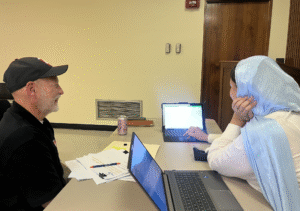



Eastern Michigan University approaches sustainability through a systemized framework and a community-derived mindset that together drive several sustainability initiatives and sustainable infrastructure endeavors on campus.
For its sustainability framework, EMU uses the Association for the Advancement of Sustainability in Higher Education (AASHE) and its Sustainability Tracking, Assessment and Rating System (STARS) system and has developed a President’s Sustainability Commission, comprising a broad array of offices and people across the university to develop and execute sustainable practices.
SBN Detroit spoke to Tom Kovacs, chair of the president’s sustainability commission and professor of meteorology and climate in the Department of Geography & Geology, about EMU’s sustainability efforts.
Q: What are some of the recent sustainability initiatives you’ve put into place?
A: First, we are very proud to have completed our STARS certification process and received Bronze Certification.
We know that there is room for improvement, which is what we are working on this year. One of the areas we scored lower on is engagement, so to that end, we are building sustainability information into our orientation for 2023 and also are doing a lot more to let people know the sustainability commission exists and inviting people in to help with our efforts.
We also very recently partnered with a sustainable mobility solution – Spin Scooters – as the exclusive scooter provider on campus which is helping a lot with student and staff transportation.
Another development is a new partnership with EnergySage.
EnergySage provides a marketplace that connects interested parties to vetted installers. You simply list your needs, and the various installers provide you with a quote and basically compete for your business, so you ultimately get the best deal.
There is also an educational component of EnergySage that offers advisors to help work through the options, as well as a full library of resources on clean energy, and how to live more sustainably.
This collaboration helps us improve our STARS ranking and benefits the EMU community so it’s a win-win.
Q: How is the university’s heat powered?
A: We have a 55-ton cogeneration system that is powered by natural gas and produces electricity and steam. The system supplies approximately 98 percent of the heat and 93 percent of the electricity to the 800-acre campus.
The unit will create an annual reduction of 21,305 tons of carbon dioxide (CO2), equivalent to 78.2 million miles driven by an average passenger vehicle – or the preservation of 260 acres of forests.
Q: What are some other examples of campus infrastructure focused on sustainability?
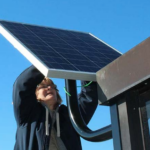
A: We have solar panels installed at bus stops lining the perimeter of campus and one in the middle of campus. The energy from the sun is stored in the battery assemblies to be utilized during the evening hours to keep travelers safe.
We also have a student-led Giving Garden that provides an opportunity for staff, faculty, students, and Ypsilanti residents to grow fresh produce. It’s also used to educate local preschoolers and other students in the area.
There is a new composting effort underway, and the garden provides locally grown food to the Swoops Pantry.
Q: What is the Swoops Pantry?
A: The Swoops Pantry was initiated by a former EMU student and is run by a leadership board of faculty, staff, students, and alumni volunteers. It operates as a sustainable resource for food-insecure students. There is a large stigma involved so they work hard to make things discreet and anonymous.

Similar to Swoops, we also recently initiated an EMU Career Closet that provides apparel for students going on interviews. This is a great resource for those who don’t have the means to shop and purchase extra clothing.
Q: The dining services in EMU dorms are managed by Compass Group’s Chartwells Higher Education Dining Services. What does this mean in terms of sustainable food practices?
A: We shifted to privatized dining about six years ago and work with Compass Group to make dining a more sustainable endeavor. They’ve partnered with local community gardens; they work to incorporate composting; they work to limit waste; and they host a number of events such as Meatless Mondays and Farm to Fork luncheons. They also host a teaching kitchen. We have people from their team who volunteer on our Sustainability Commission, and they will be speaking at our student orientations on sustainability.
Q: You also have an office supply program – Partnering for Sustainability.
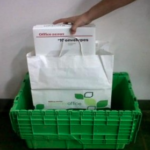
A: Yes, in 2019 we partnered with Office Depot. This allows the EMU community to purchase greener office products and select greener options when available. Recycled bags and reusable plastic totes are also used for delivery versus boxes.
Q: What are your areas of focus for the near future?
A: We’ll continue all of our efforts in the initiatives we’ve discussed here and seek to enhance them where appropriate.
And again, coming off of the recent STARS certification process, our big focus is engaging the community in all of these efforts and more to work toward a greener campus and surrounding area.
Be sure to subscribe to our newsletter for regular updates on sustainable business practices in and around Detroit.


In November 2023, the City of Detroit enacted an Energy and Water Benchmarking Ordinance requiring buildings 25,000 square feet and larger to annually report their energy and water usage to the city. The policy focuses on transparency, giving building owners and city leaders insight into how buildings perform and where opportunities may exist to improve efficiency and reduce costs. SBN Detroit interviewed Maria Galarza, Deputy Director of the...
Detroit-based nonprofit Elevate focuses on the intersection of energy equity, housing stability, and workforce development. Through community partnerships and programs that connect residents with energy-efficiency upgrades, education, and job-training opportunities, the organization works to strengthen neighborhoods while helping families reduce costs and improve living conditions. SBN Detroit interviewed Shawna Forbes Henry, Director of Community Programs at Elevate, about the broader implications of energy access, the structural barriers communities...

The Green Business Lab, founded in 2002 by Samantha Svoboda, aims to help organizations strengthen decision-making about sustainability through immersive business simulations and strategic advisory services. Working with leadership teams across industries, the Lab creates structured environments where executives can explore how environmental, operational, and market forces intersect with core business strategy. Over more than two decades, the Green Business Lab has worked with companies toward moving sustainability...