
SBN Detroit interviews Erik Petrovskis, Director of Environmental Compliance and Sustainability for Meijer, the Michigan-based retailer with more than 250 stores and 70,000 employees in six states throughout the Midwest. The company ranks 13th on Forbes’ 2021 Largest Private Companies list.
Petrovskis leads environmental management across Meijer, including remediation, due diligence, and multimedia compliance programs, and represents the company’s position on regulatory matters.
Here he shares some of the efforts, challenges, and goals that are in place, and the opening of the
Q: Meijer has a goal of reducing 50% of absolute carbon emissions by 2025 – Can you elaborate and share what actionable items you are working on toward that?
A: Meijer set a goal to reduce our absolute carbon emissions by 50 percent by 2025. This reduction represents the emissions over which Meijer has operational control and includes things like our fuel, electricity, natural gas, and refrigerant usage.
We have many ongoing projects to reach the reduction goal, including energy efficiency improvements, refrigerant leak detection systems, and fuel efficiency strategies for our fleet. Our virtual power purchase agreements (VPPAs) for two renewable energy fields will also support reaching a 50 percent reduction.
Q: Tell us about Meijer’s investment in the Texas-based Lacy Creek Wind Energy Center and how it pertains to Meijer’s carbon emission reduction goals.
A: Our investment is structured as a virtual power purchase agreement (VPPA). In this agreement, Meijer commits to purchasing much of the energy generated from the wind farm and receives renewable energy credits (RECs). This project is coupled with the Pisgah Ridge Solar project, which utilizes the same type of agreement. The RECs certify our purchase of renewable energy and therefore represent a reduction in overall carbon emissions from the energy we purchase.

Q: When did Meijer initiate sustainability practices?
A: Meijer was an early adopter of green initiatives. Fred Meijer, who led the company for more than 40 years, vowed to “Leave the world in a little better shape than when I entered it.” In fact, Fred Meijer spoke at the first Grand Rapids Earth Day celebration in 1970, and company-wide recycling, energy, and waste reduction programs were in place by 1973.
Since then, we’ve undertaken many sustainability-related projects, like our plastic bag recycling drop-off, installing EV chargers at select stores, and sourcing responsible seafood. Among others, these efforts became formalized when Meijer established its first sustainability plan in 2014.
At Meijer, we understand that to be a good company, we must be a good neighbor. We integrate environmental sustainability into our daily operations, not only because it makes good business sense, but because it aligns with our values and mission of enriching lives in the communities we serve. Our sustainability program has evolved to prioritize four pillars: carbon emissions reduction, food waste reduction, circular economy, and Great Lakes Stewardship.
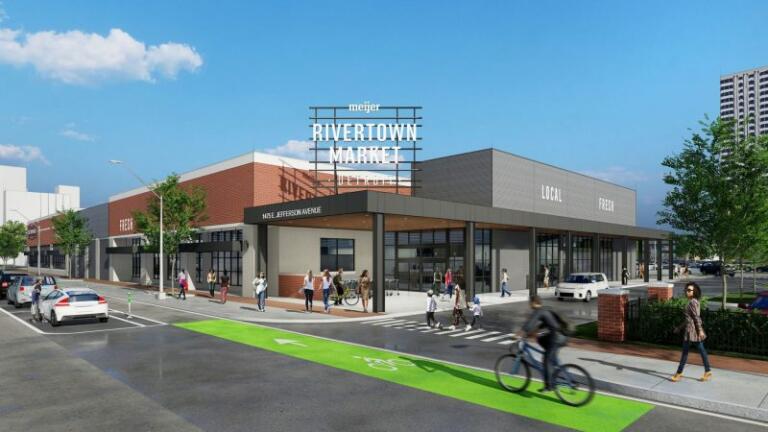
Q: Regarding the Detroit Rivertown location in Lafayette Park, what community partnerships have been put in place since opening?
A: Since the store opened in 2021, Meijer has supported more than 20 community organizations, including Junior Achievement of Southeastern Michigan, Bees in the D, The Better Detroit Youth Movement, Pure Heart Foundation, and Greening of Detroit.
Q: Are there any other sustainability efforts that are unique to the Rivertown location?
A: The Rivertown Market includes electric vehicle charging as an amenity to our customers. This is part of our greater network of EV chargers, which includes more than 70 stores in our footprint. Rivertown Market will also participate in our Gutter Bin pilot program, which is part of our Great Lakes Stewardship efforts. The Gutter Bins will catch garbage and other debris from our parking lots before it enters the waterways. The Council for the Great Lakes Region will coordinate metric tracking and evaluation of the initiative, which is occurring across nine Meijer stores.
Q: How does this location and Meijer overall deal with food waste?
A: Meijer aims to keep food waste out of landfills. This begins with our ordering process, in which we optimize the quantities ordered to reduce overstock. However, we also have partnered with several organizations to find other solutions.
For example, we work with Feeding America, and their network of food banks across our footprint, on our Food Rescue program to provide food nearing its sell-by date to those in need. In 2021, we donated 13.7 million pounds of food through this program.
We also rolled out Flashfood program, which acts as a virtual clearance rack for food nearing its sell-by date. This program is not currently available at Rivertown Market but has already diverted more than 1 million pounds of food from potentially entering landfills.
Also, any food that can no longer be consumed, including things like food scraps and rotten produce, is picked up from our stores, distribution centers, and manufacturing facilities by third-party vendors, who process the waste into animal feed and compost.

Q: What are your biggest challenges when it comes to reaching your sustainability goals?
A: We’re lucky to have had strong support both internally and externally regarding our sustainability goals. However, one initial challenge with ours was leading a cohesive path forward. The formation of our Sustainability Council united the company and allowed sustainability to move out across all functions of the business. The Sustainability Council, which is made up of representatives from across the company’s business areas, has served as a powerful mechanism in moving our efforts forward and achieving goals with strong cross-functional collaboration.
Q: From your perspective, what is the role of businesses in Detroit in terms of sustainability overall for the city?
A: Business plays a key role in sustainability on a global scale. Specifically in Detroit, a focus on business sustainability is essential for the city’s renaissance to be successful and enduring. Meijer is grateful to have the opportunity to support the city’s revival, taking both environmental and social sustainability into account.
Q: What businesses and partners and vendors are you working with in Detroit who are doing it well?
A: Meijer features hundreds of local vendors and thousands of local products at Rivertown Market, supporting brands and manufacturers in Detroit and across Michigan. We’re continuing to add local and sustainable products to our offerings through supplier summits. Kudos to all the great organizations enabling sustainability in Detroit.



In November 2023, the City of Detroit enacted an Energy and Water Benchmarking Ordinance requiring buildings 25,000 square feet and larger to annually report their energy and water usage to the city. The policy focuses on transparency, giving building owners and city leaders insight into how buildings perform and where opportunities may exist to improve efficiency and reduce costs. SBN Detroit interviewed Maria Galarza, Deputy Director of the...
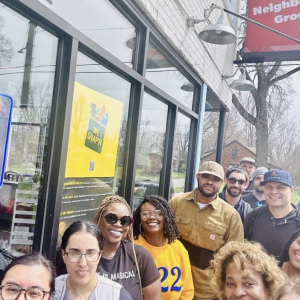
Detroit-based nonprofit Elevate focuses on the intersection of energy equity, housing stability, and workforce development. Through community partnerships and programs that connect residents with energy-efficiency upgrades, education, and job-training opportunities, the organization works to strengthen neighborhoods while helping families reduce costs and improve living conditions. SBN Detroit interviewed Shawna Forbes Henry, Director of Community Programs at Elevate, about the broader implications of energy access, the structural barriers communities...

The Green Business Lab, founded in 2002 by Samantha Svoboda, aims to help organizations strengthen decision-making about sustainability through immersive business simulations and strategic advisory services. Working with leadership teams across industries, the Lab creates structured environments where executives can explore how environmental, operational, and market forces intersect with core business strategy. Over more than two decades, the Green Business Lab has worked with companies toward moving sustainability...