


SBN Detroit spoke with Tracy Reese, an American fashion designer who has been featured in fashion publications that include Vogue, Elle, Glamour, InStyle, and O, The Oprah Magazine; and whose creations have been worn by Michelle Obama, Sarah Jessica Parker, and Taylor Swift.
In 2018, after 30 years in the industry, Reese moved back to her hometown of Detroit and in 2019 launched Hope for Flowers by Tracy Reese. The collection is designed and produced following three guiding principles of sustainability: the health of people, the planet, and equity in profit.
Reese serves on the board of directors of the Council of Fashion Designers of America (CFDA), where she has been a member since 1990. Reese also serves on the board of trustees of Nest Artisan Guild and the advisory council of the College for Creative Studies Fashion Accessories Design Program. She is also part of Turnaround Arts, a Kennedy Center program that transforms schools through the strategic use of arts.
She recently served as board president of ISAIC, the Industrial Sewing and Innovation Center. She is working to build an artisan studio in Detroit creating economic opportunities for women in underserved communities.
Q: Please share how Hope for Flowers and the sustainability aspect came about.A: In 2017, I had three labels and had been working in the industry for more than 30 years with my own brand, functioning as a typical manufacturing wholesaler. All of my production was overseas, and I sourced fabrics from all over the world.
I started learning more about sustainability, and around that time, the CFDA + Lexus Fashion* Initiative that focuses on sustainability launched. I missed the deadline to apply in 2017 and was determined to apply the following year, so I did, and I was selected. It was an eye-opener. It was nine months of learning about everything from textiles to carbon footprint to human rights issues within the supply chain to waste in pattern making and more.
At the end of the program, we were required to present a blueprint to be judged, and then to follow through with the blueprint.
During this time, I started feeling a pull back toward Detroit and bought a house. I was trying to determine how I could be back in the city more. As I created this blueprint, I realized that Detroit was the perfect place to launch a brand. I started changing my perspective on how I was working.
Running parallel to this was an impending departure of ways with my partners. There were things we didn’t see eye to eye on that were nonnegotiables for me. They wanted to go for volume, and I wanted to do something smaller and more meaningful and work on giving back to the community.
So, I took the blueprint and headed to Detroit. Part of my blueprint included localized production, so training Detroiters to be part of this industry in a meaningful way was a natural next step. I set up a business model with a social and sustainability-focused mission.
I worked with Shayla Johnson from Scarlet Crane Creations and interns from Cass Tech, my alma mater. We manufactured in Flint. This set the groundwork for Hope for Flowers.

Q: Do you have a set of short-term and longer-term goals you are working toward as you grow Hope for Flowers?
A: My short-term goal was and is to address the low-hanging fruit – textiles. Every product we work with falls into the mild zone. We are using bast fibers like linen – a crop that doesn’t require lots of water and doesn’t deplete the earth of nutrients. We also use organic cotton and responsibly forested wood byproduct fibers like Tencel and are experimenting with recycled wool and other fabrics. The idea is to create garments that stand the test of time yet biodegrade over the long haul.
We look at biodegradable materials for buttons like natural shells or wood and try to use natural things found on the planet versus man-made
We also try to design clothes that are flexible, meaning two different sizes can wear the same garment. This reduces overproduction
My long-term goal is to produce in Detroit. To that end, we are training and working with local craftspeople and sewers to develop them to a stage of mastery that’s competitive with what we can import. We are launching an apprenticeship program, and our goal is to start running small-batch production in-house.

Q: What impact do you think Hope for Flowers and the vendors and partners you work with are having?
A: Each one of us is proving it’s possible, and I think that makes an impression on anyone considering taking steps toward sustainability. When those in doubt see a successful business model that’s working and financially viable, that’s impactful.
The more people who choose to work this way, the easier and less expensive it becomes, and we can speak collectively. We need everybody to get on board, so it’s about setting aside the competitive mindset and working as a unified industry.
Q: What drives your passion when it comes to the brand and its deep commitment to sustainability?
A: I don’t see that it’s a choice really – it’s a necessity. We need to work in a way that’s less harmful to the planet and people.
It’s also about holding ourselves to a higher standard, accepting the challenge and being energized by it. The idea of trying to solve this is exciting and I want to be up for the challenge, continue to learn, and continue to grow.
Q: From your perspective – what is the role of businesses in Detroit in terms of sustainability?
A: Each business has its own role to play. Getting started doesn’t have to be complicated. There are simple internal things that – when built into the company philosophy – begin to embed new habits and practices in the employees. We started composting a few months ago, and we are all working on developing new habits. Understanding simple principles first and then teaching others by example is low-hanging fruit.

Q: What businesses and partners are you working with that are doing it well?
A: A designer who I look up to is Mara Hoffman in New York. She has tackled every component in her garments and is having fun doing it.
I think everyone is learning. I’m learning and I hope to be doing better in six months, and better yet in a year.


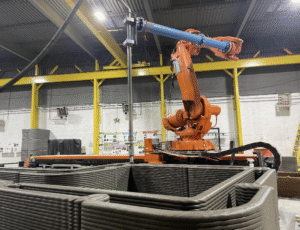
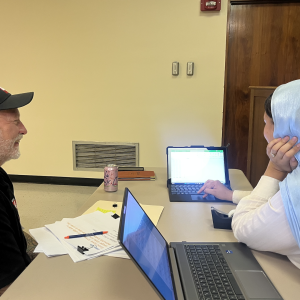
In November 2023, the City of Detroit enacted an Energy and Water Benchmarking Ordinance requiring buildings 25,000 square feet and larger to annually report their energy and water usage to the city. The policy focuses on transparency, giving building owners and city leaders insight into how buildings perform and where opportunities may exist to improve efficiency and reduce costs. SBN Detroit interviewed Maria Galarza, Deputy Director of the...
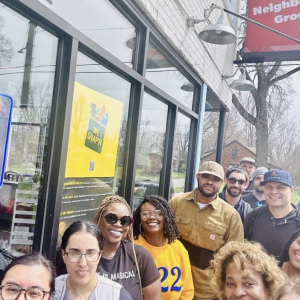
Detroit-based nonprofit Elevate focuses on the intersection of energy equity, housing stability, and workforce development. Through community partnerships and programs that connect residents with energy-efficiency upgrades, education, and job-training opportunities, the organization works to strengthen neighborhoods while helping families reduce costs and improve living conditions. SBN Detroit interviewed Shawna Forbes Henry, Director of Community Programs at Elevate, about the broader implications of energy access, the structural barriers communities...
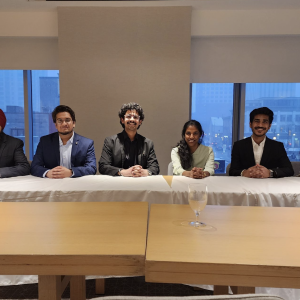
The Green Business Lab, founded in 2002 by Samantha Svoboda, aims to help organizations strengthen decision-making about sustainability through immersive business simulations and strategic advisory services. Working with leadership teams across industries, the Lab creates structured environments where executives can explore how environmental, operational, and market forces intersect with core business strategy. Over more than two decades, the Green Business Lab has worked with companies toward moving sustainability...