





A Deeper Discussion on Businesses in the Great Lakes Region

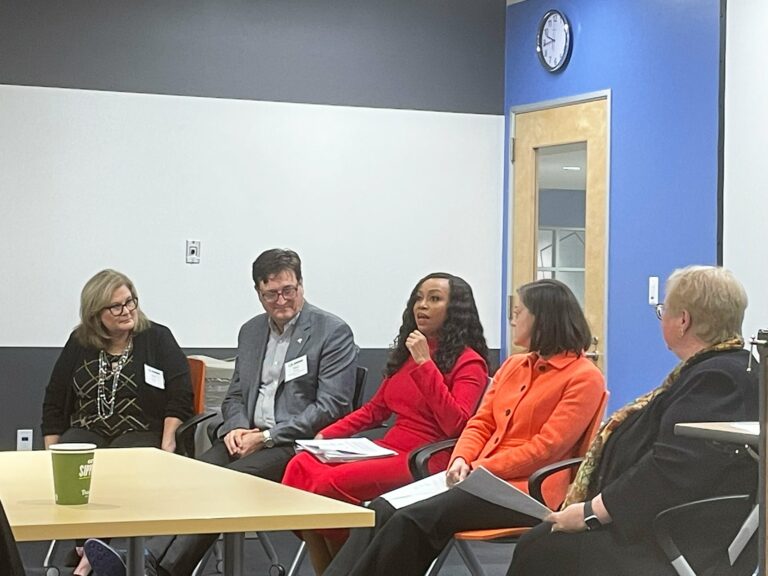
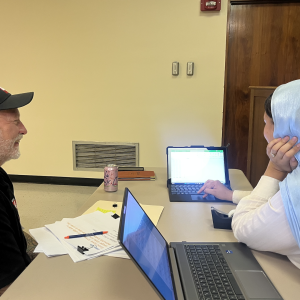
On Oct. 31, SBND hosted a panel focusing on business and sustainability in the Great Lakes region. The event was a collaboration with the Council of the Great Lakes Region and featured Shanelle Jackson, senior manager, LyondellBasell; Edna Lorenz, energy director, Corewell Health; Mark Schrupp, executive director, Detroit/Wayne County Port Authority; and Lillian Woolley, senior chemical engineer, Fishbeck. It was a fascinating discussion, and I encourage you to read the story here.
Before the panel discussion, Colin Bird, counsel general of Canada in Detroit, spoke about how Canada and the U.S. work together on issues that include the environment, maritime trade, and stewardship of the Great Lakes. In Michigan, we are more aware of this than most in the U.S., but some of the specifics were new to me. Some examples:
- In 2022, Canada was the U.S.’s largest trading partner in goods and services.
- About 80% of Canadian goods exports to the U.S. ‘feed’ American supply chains for final goods.
- According to U.S. trade data, in 2022, bilateral trade in goods and services was US$914.3 billion, representing over US$2.5 billion worth of goods and services crossing the border every day.
- The joint stewardship of the environment is a cornerstone of Canada-U.S. relations, from air and water quality to wildlife management. This includes at least 50 federal bilateral arrangements, more than 100 arrangements at the state and provincial level, and the Boundary Waters Treaty of 1909.
- The Canada-U.S. Joint Action Plan on Critical Minerals Collaboration and the Memorandum of Understanding (MOU) expand energy cooperation between the two countries are some examples of collaborative initiatives.
- Canada’s 2023 federal budget allocates $650 million over ten years to support monitoring, assessment, and restoration work in key freshwater ecosystems, many of which are shared by Canada and the US. Of this total, $420 million will go towards restoring and protecting the Great Lakes, complementing significant U.S. efforts in this regard.
- On September 18, the University of Michigan announced an award of $5 million from the National Science Foundation to establish the Global Center for Understanding Climate Change Impacts on Transboundary Waters, comprised of U.S. and Canadian universities and Indigenous representatives. McMaster University will lead the Canadian side, with $3.75 million in funding provided by the National Science Foundation.
More trade statistics specific to Michigan can be found here.
Be sure to subscribe to our newsletter for regular updates on sustainable business practices in and around Detroit.
admin
- All
- Business
- Community
- Education
- Events
Unique Monique Scented Candles, a Detroit-based business founded by Monique Bounds., aims to produce candles and household products with clean ingredients and local supply chains. What began as a personal hobby during college has evolved into a full-time venture producing coconut oil and soy-based candles made with essential oils and locally sourced materials. SBN Detroit interviewed Bounds about launching a sustainable product line, sourcing challenges in Michigan, and...
Eastern Market Partnership, in collaboration with the City of Detroit’s Office of Sustainability Urban Agriculture Division, has announced $240,000 in grant funding to support Detroit-based farmers and farmer collectives. The grants will advance food access, climate education, sustainable land use, and economic opportunity, with priority given to Black- and Indigenous-led farms, youth-led initiatives, and projects rooted in historically disinvested neighborhoods. The recipients – ranging from cooperatives and community...
Citizen Robotics is a Detroit-based nonprofit that advances the use of robotics and digital manufacturing in residential construction, focusing on improving productivity, sustainability, and long-term affordability. Best known for its early work in 3D-printed housing, it explores how alternative construction methods and new financial models can reduce material waste, lower lifetime operating costs, and enhance the resilience of homes. SBN Detroit interviewed Tom Woodman, founder and president of...